
 Image 1 of 1
2018
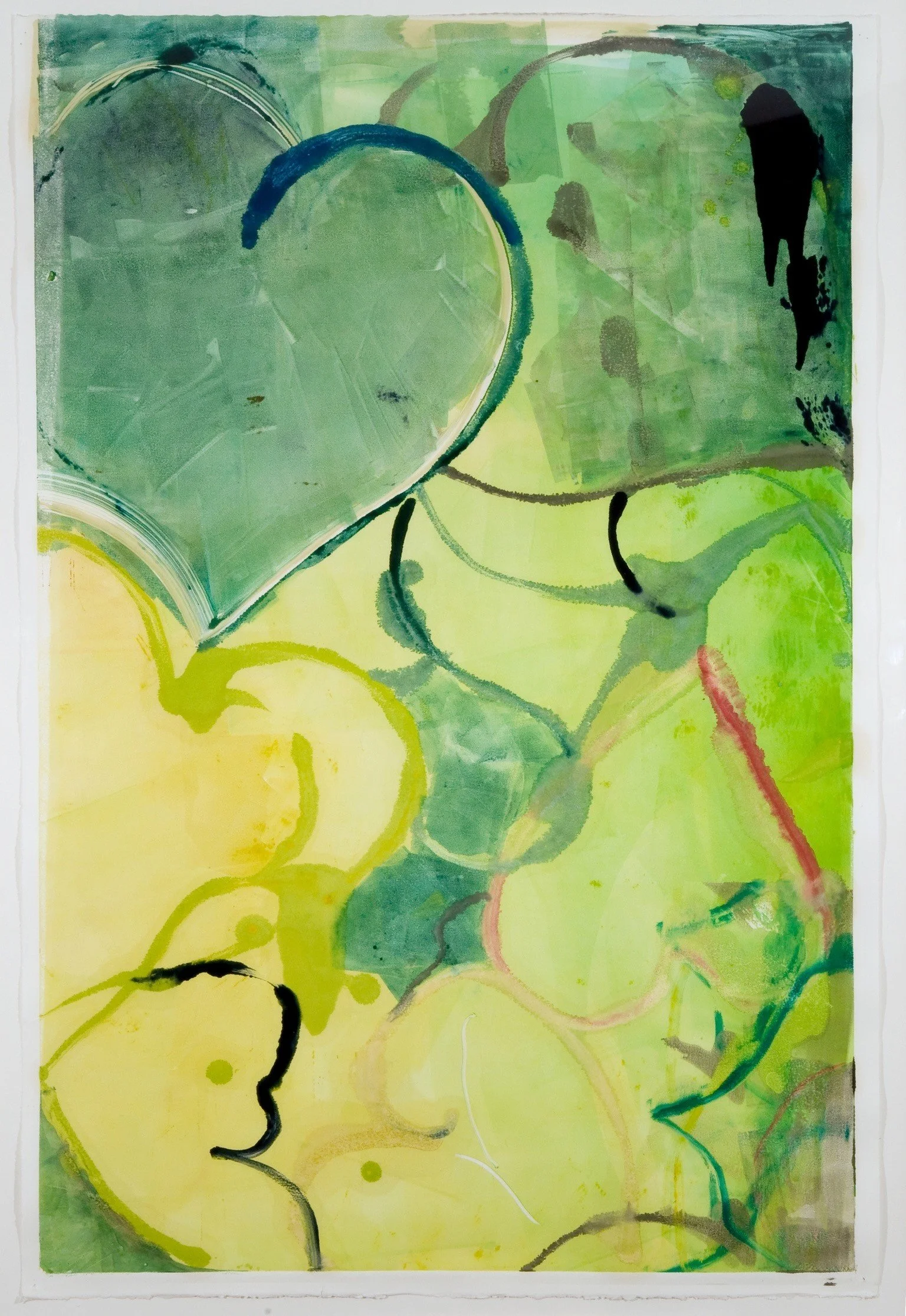
Monoprint with printing ink on arches paper
38” x 42”
My process regarding prints is savoring the materials; the damp Arches paper and the glorious jewel-like French inks. The surprise that comes off the press, as the Japanese say, is the “gift of the brush.” It is a pleasant surprise. If it is not drawn or painted over, it is considered a “ghost print,” which is the second print off the same plate. They are called monoprints, as in just one, but if there is enough ink on the plate, you can get two: a strong one and then a faint one. They always emerge like a birth and always in reverse-backwards. The artist must consider this, plus the placement of the plate onto the paper before the press rolls, as well as the amount of ink and oil. I like a lot of both, which causes oil spots and a lot of happy accidents. Master printers warn me away from this, but I cannot help myself. I start with a well-saturated brayer in one color for the entire background, paint on top of that, and then carve into the background, leaving white drawing where the sharp edge went. I occasionally work from an object or a model to give a sense of structure to the image. Sometimes nothing is planned and I just do a sensory trip. The best prints usually happen later in the session, after loosening up and finding a palette that I love. After drying, I sometimes add drawing, or more color with watercolors. It’s easy to overwork these and lose spontaneity. Let the presses roll.