
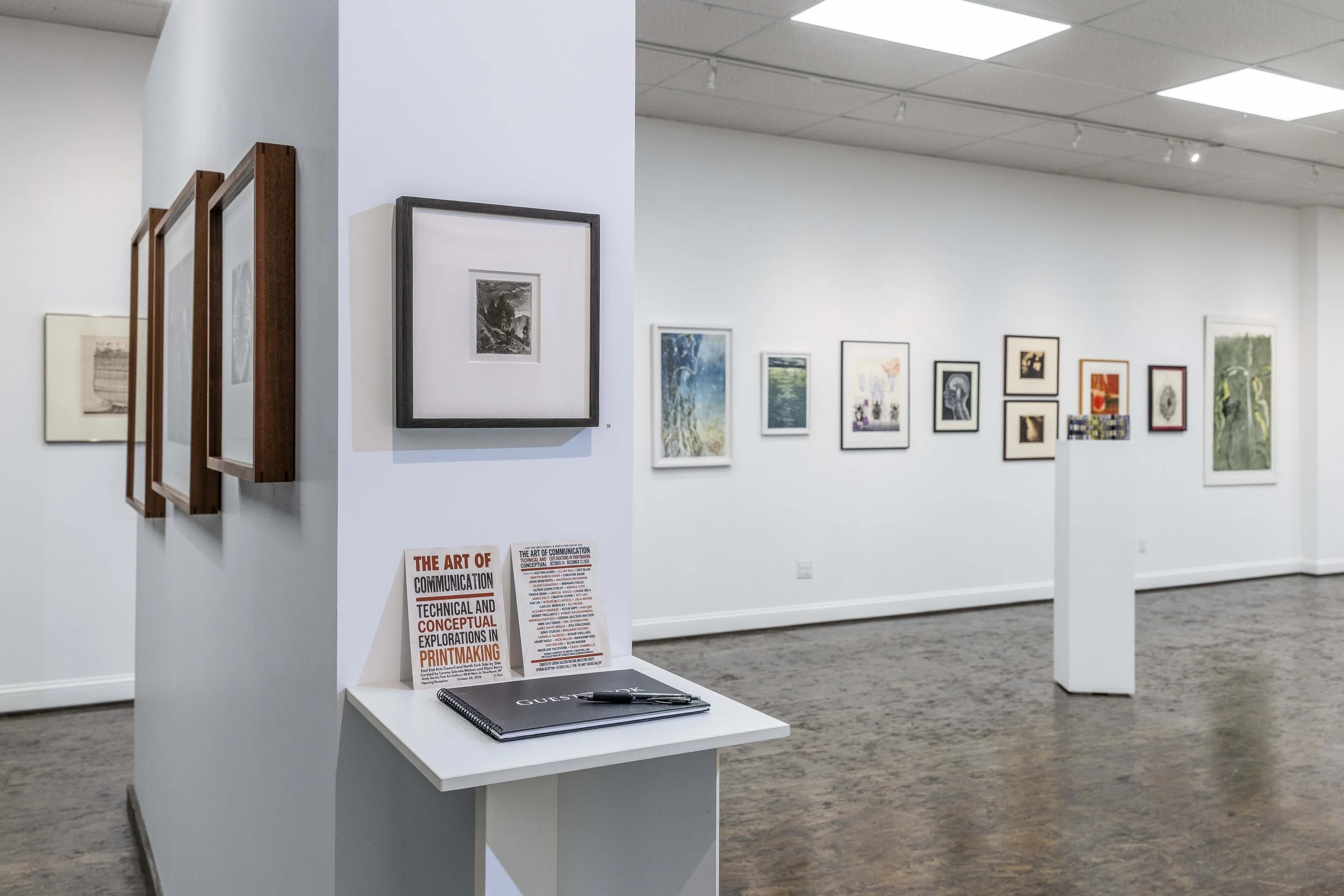
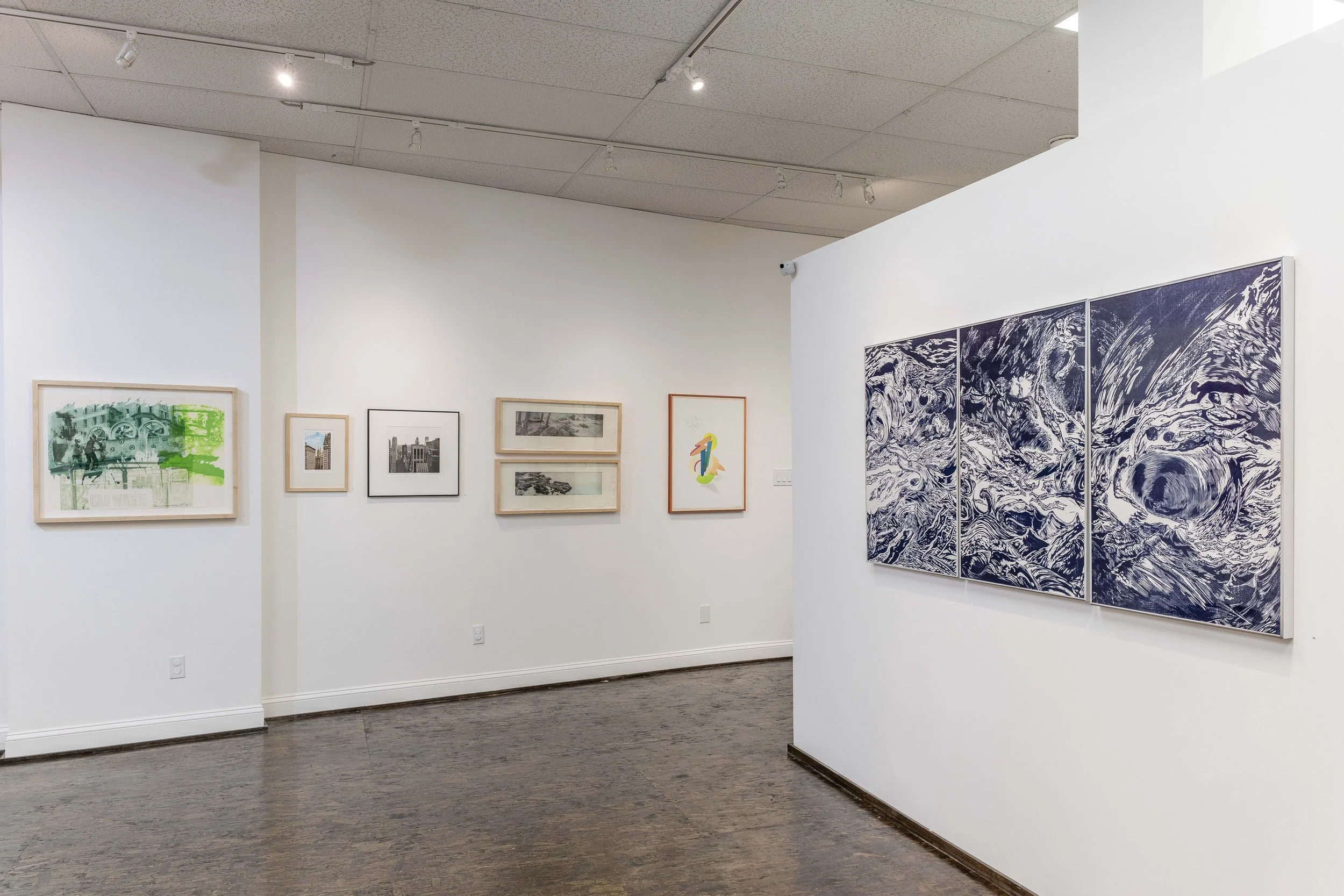
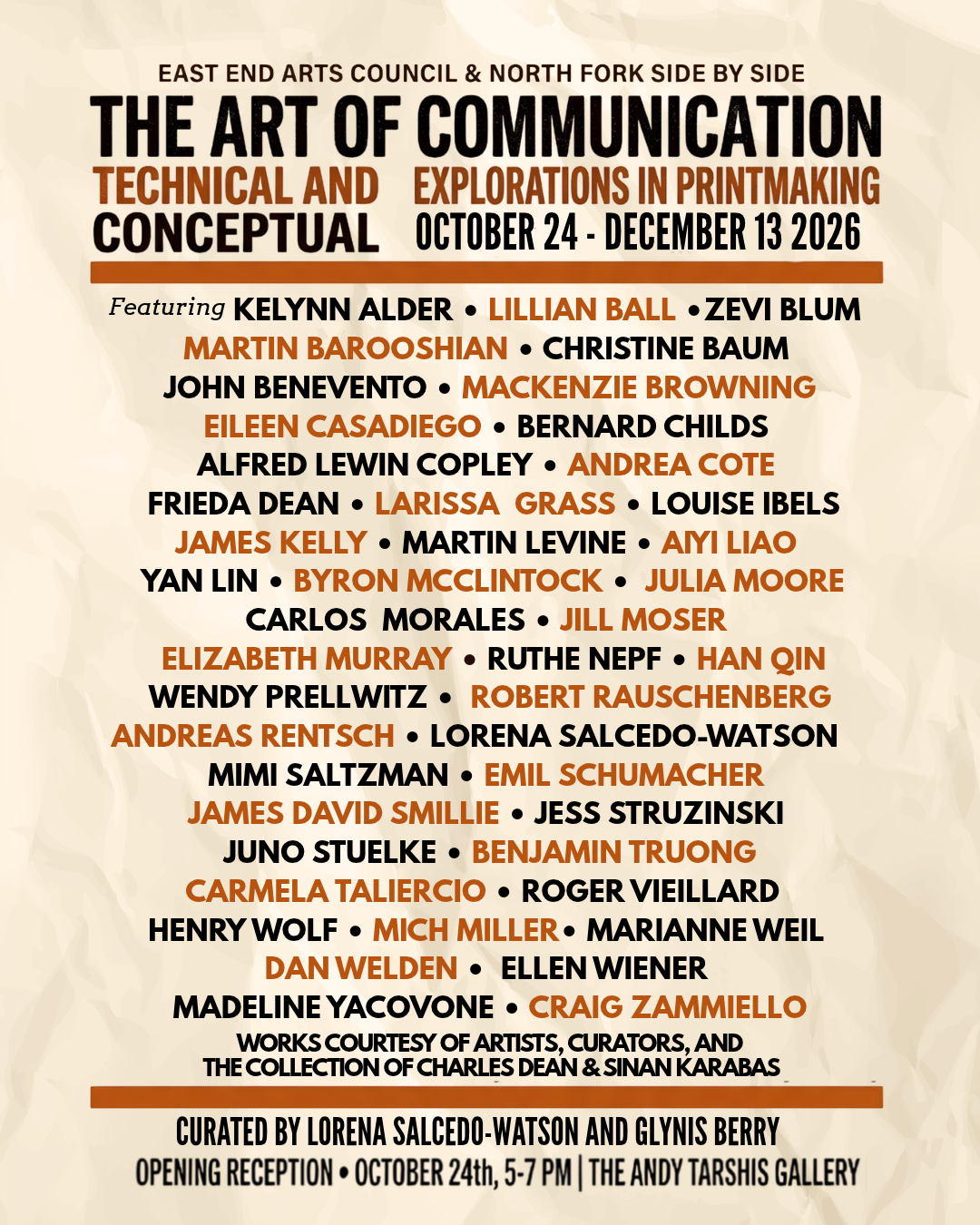
The Art of Communication: Technical and Conceptual Explorations in Printmaking
is curated by Lorena Salcedo-Watson and Glynis Berry.
Art courtesy of the artists, curators, and the collection of Charles Dean and Sinan Karabas.
Made possible in part by North Fork Side by Side.
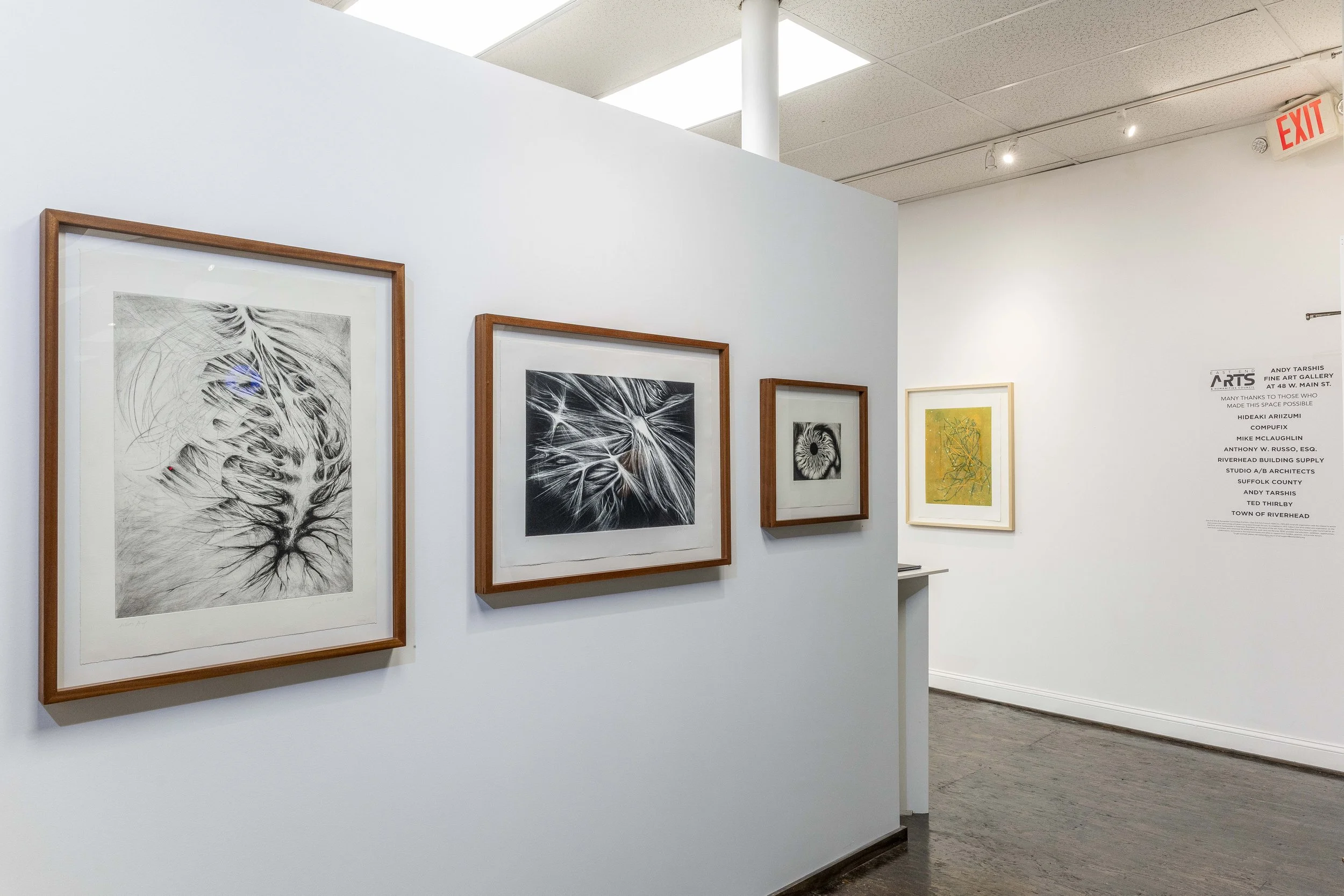
Installation photos by Jim Lennon.
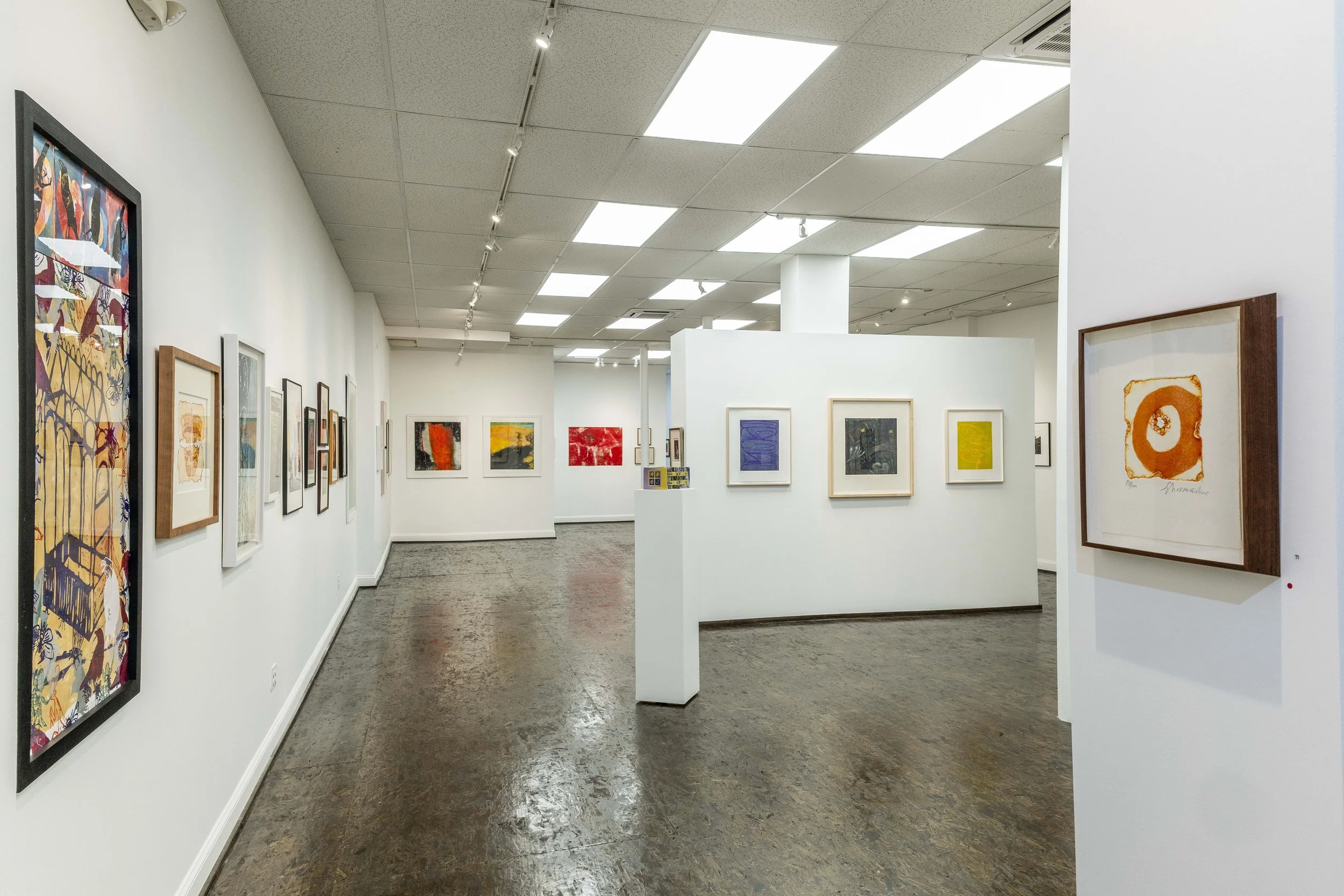
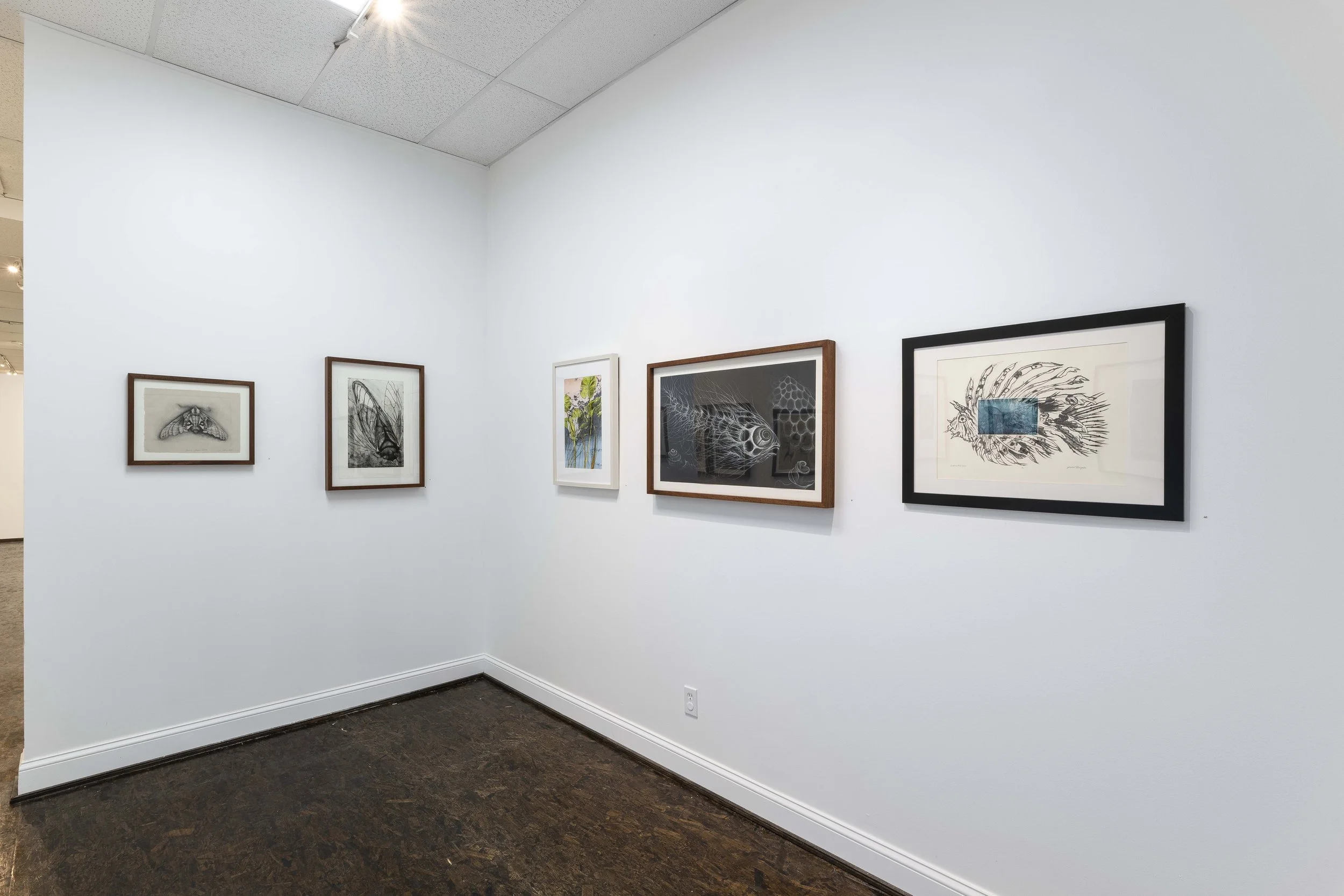
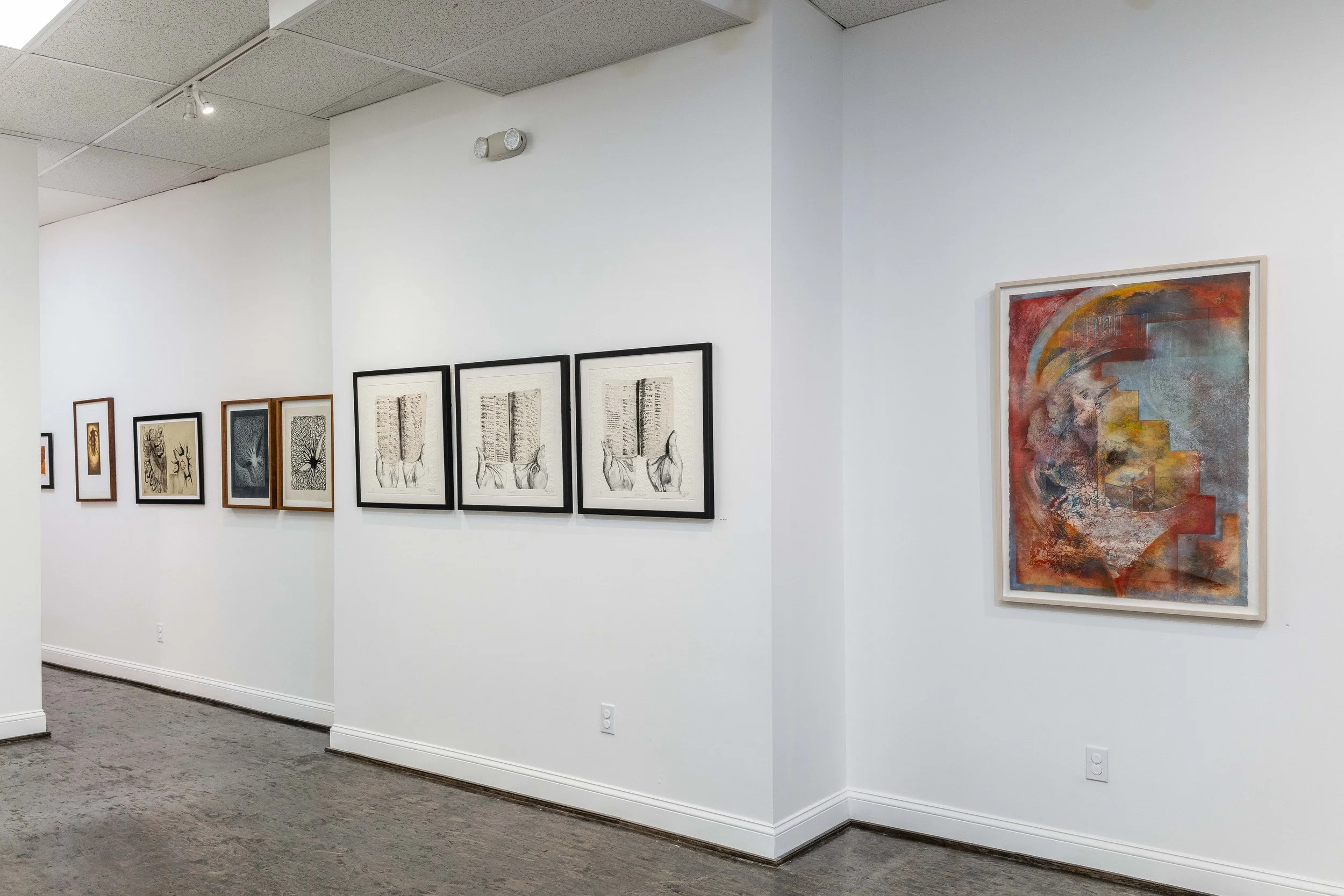
PLEASE CLICK ON ITEM FOR MORE INFORMATION
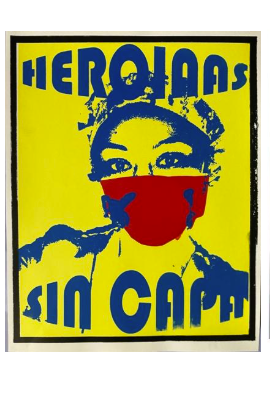
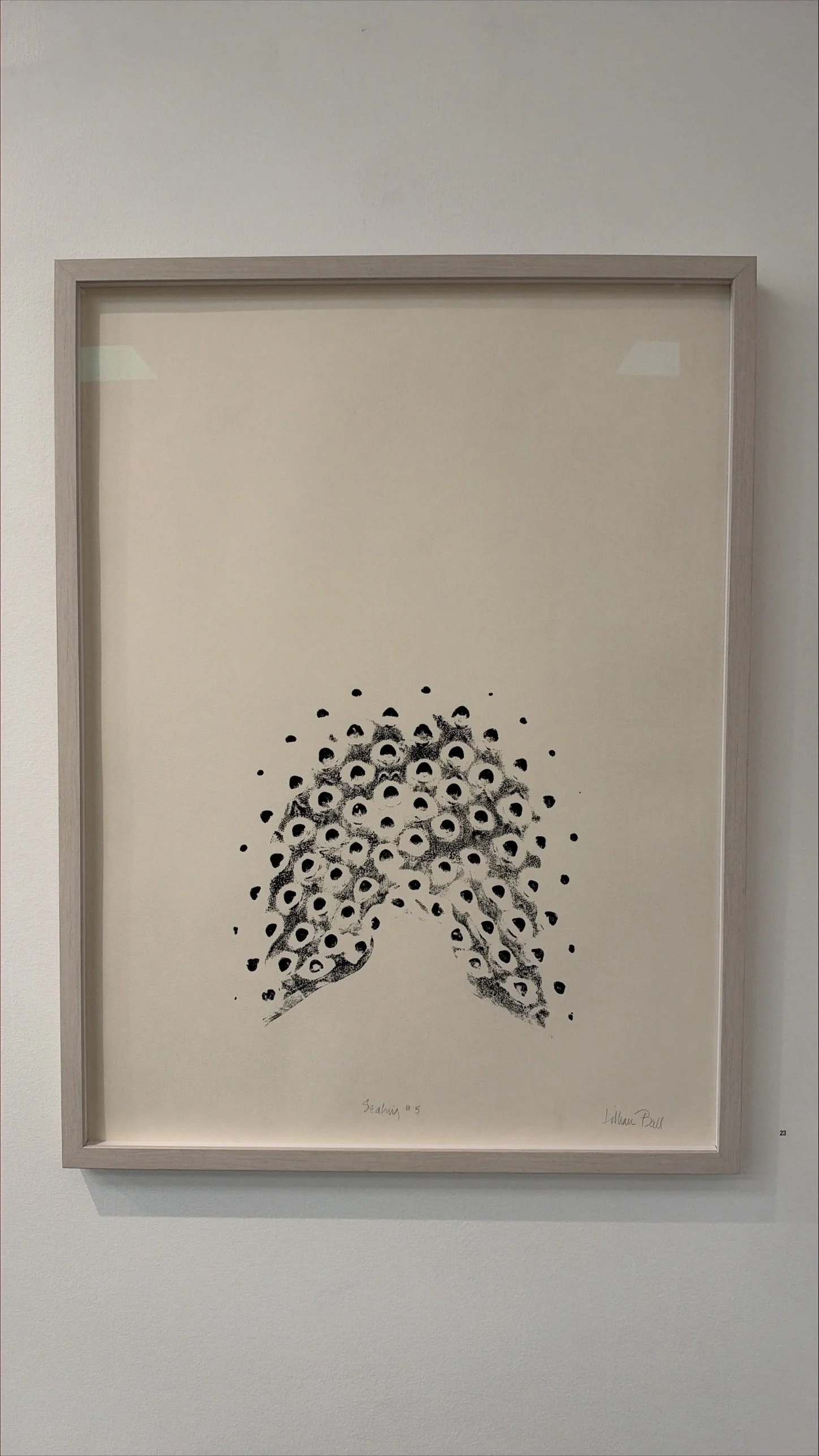
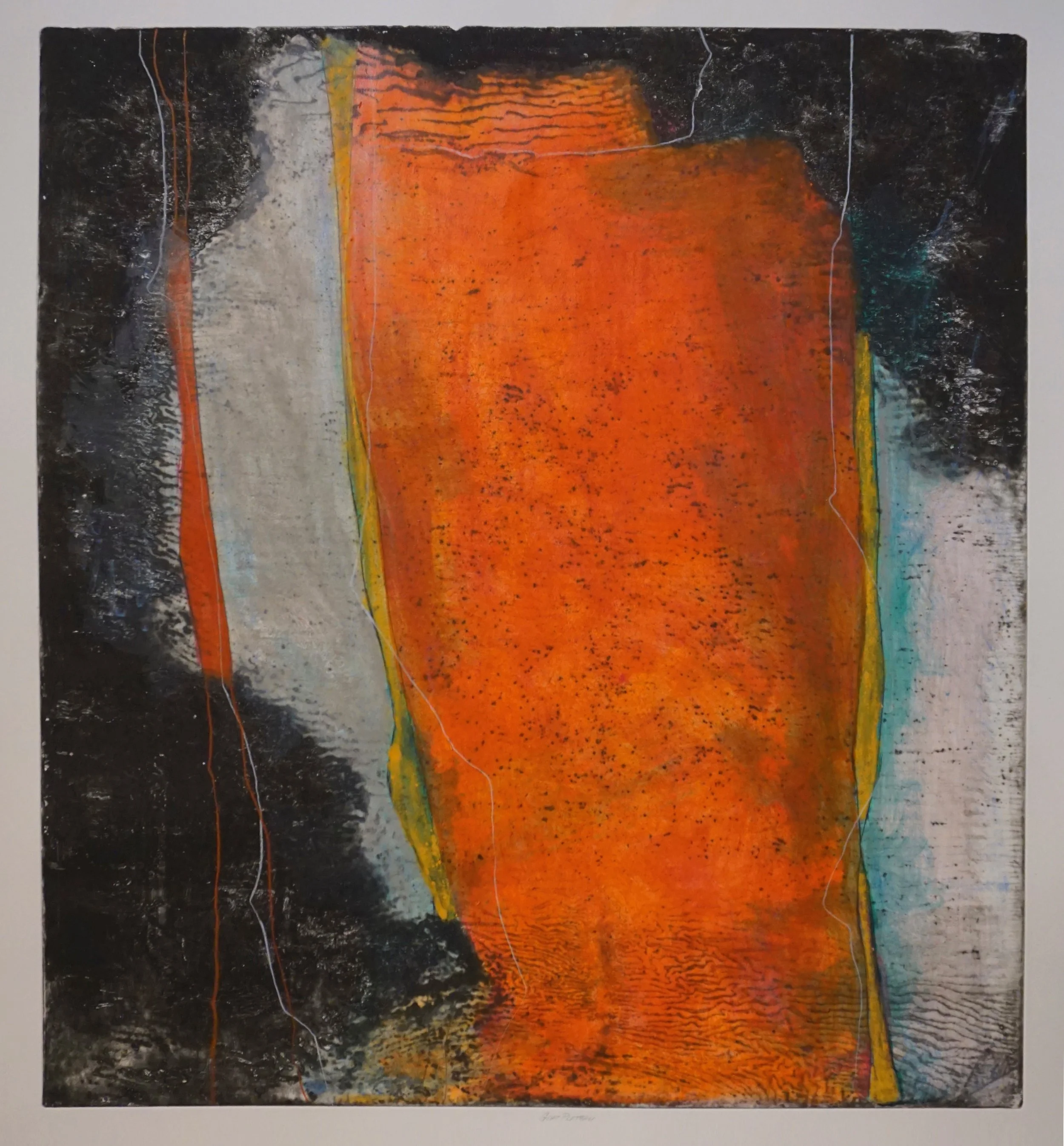
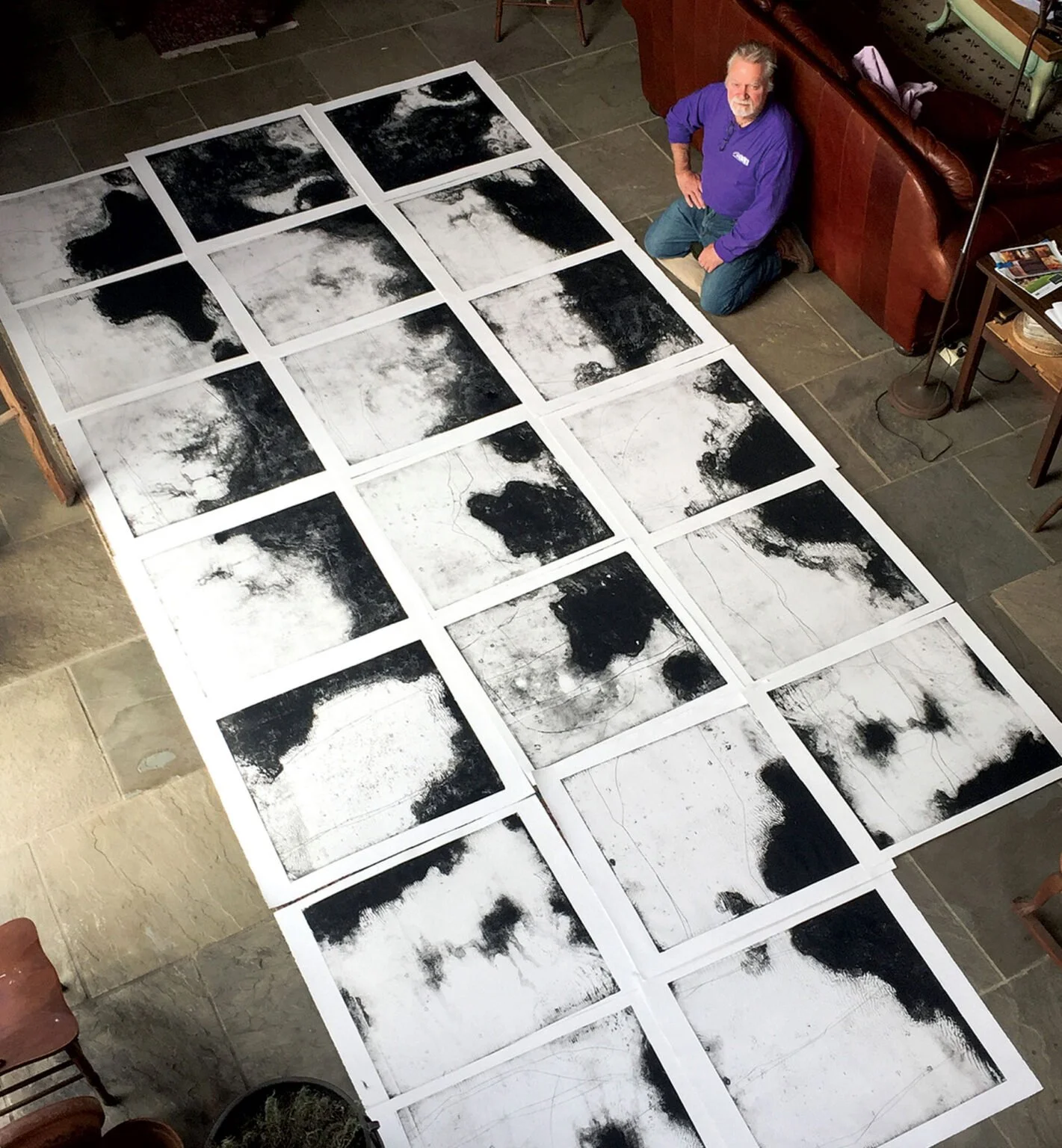
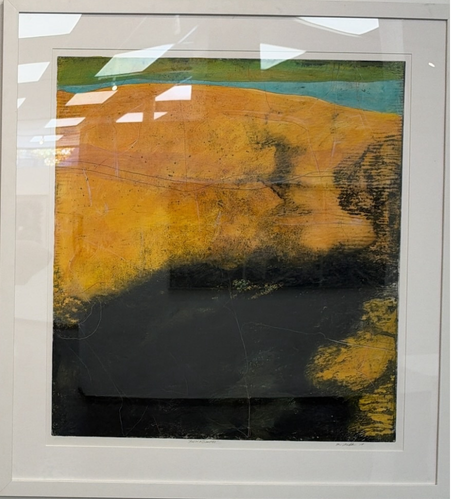
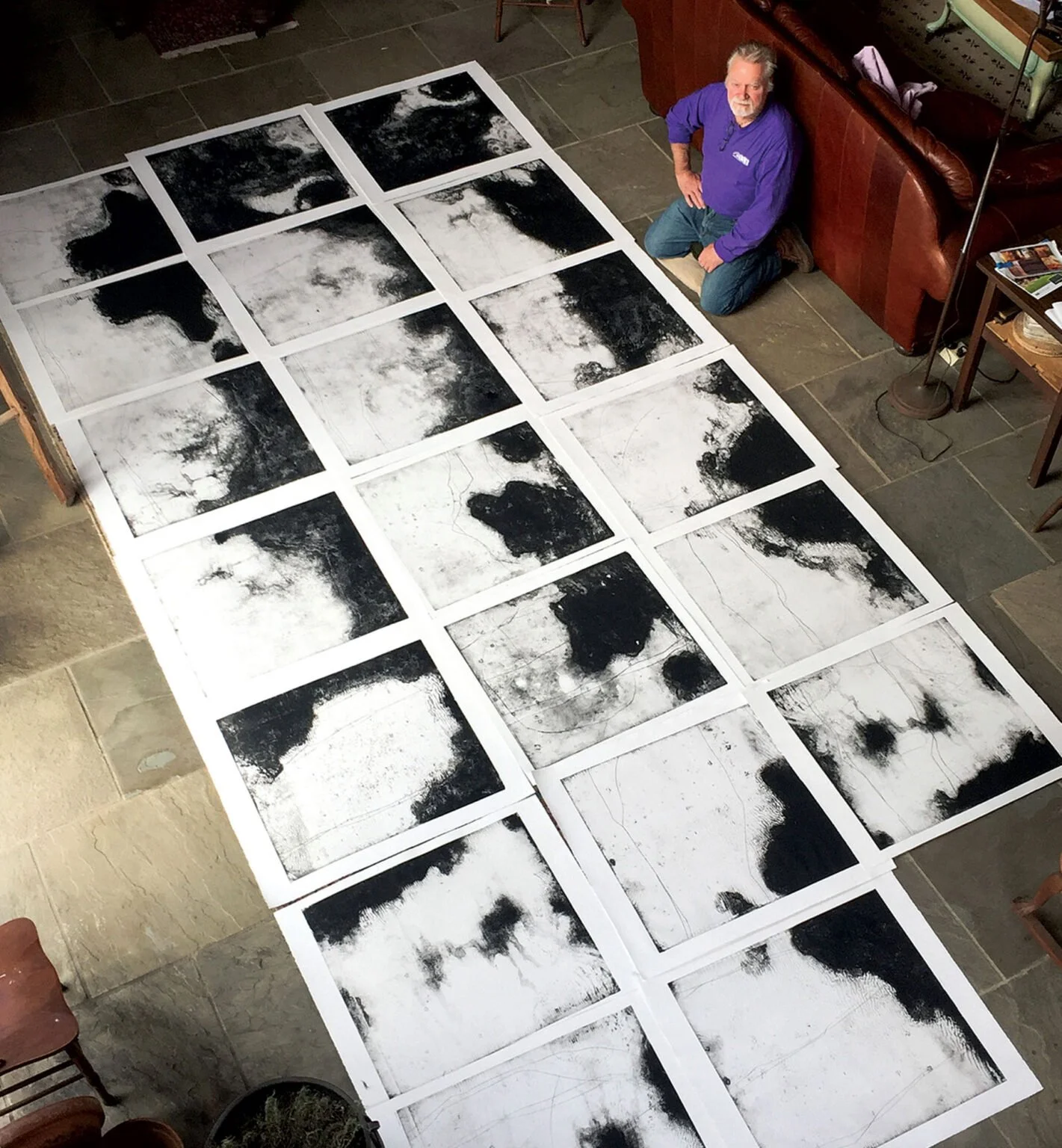
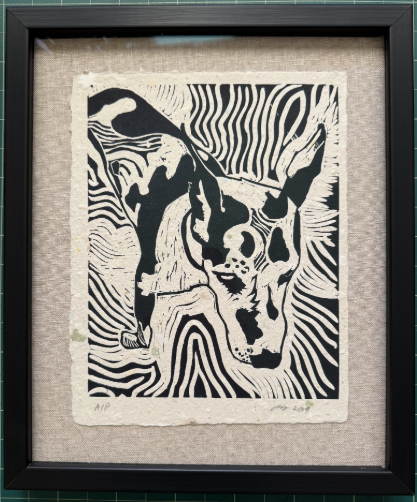
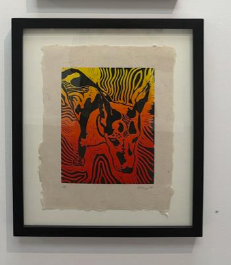
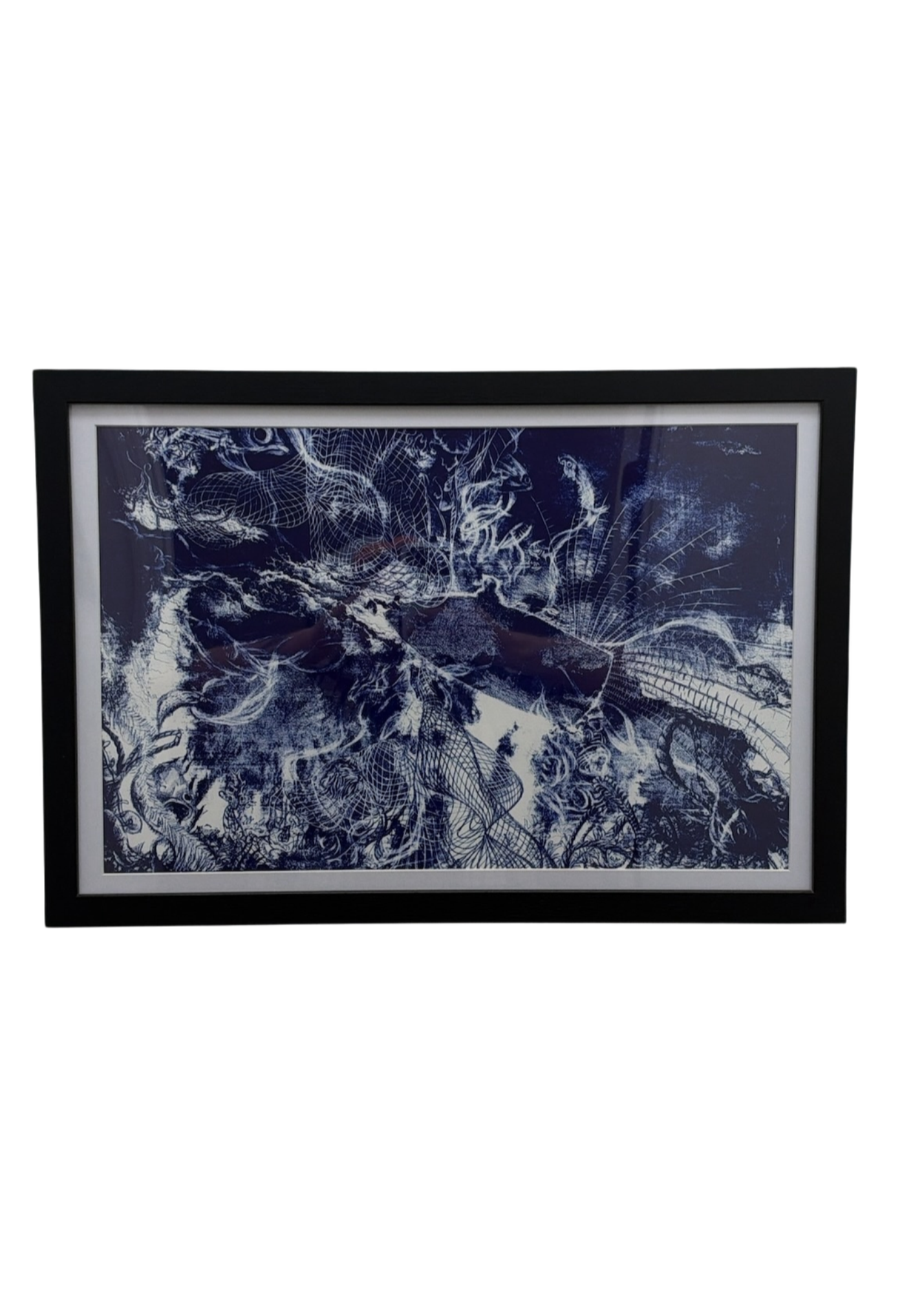
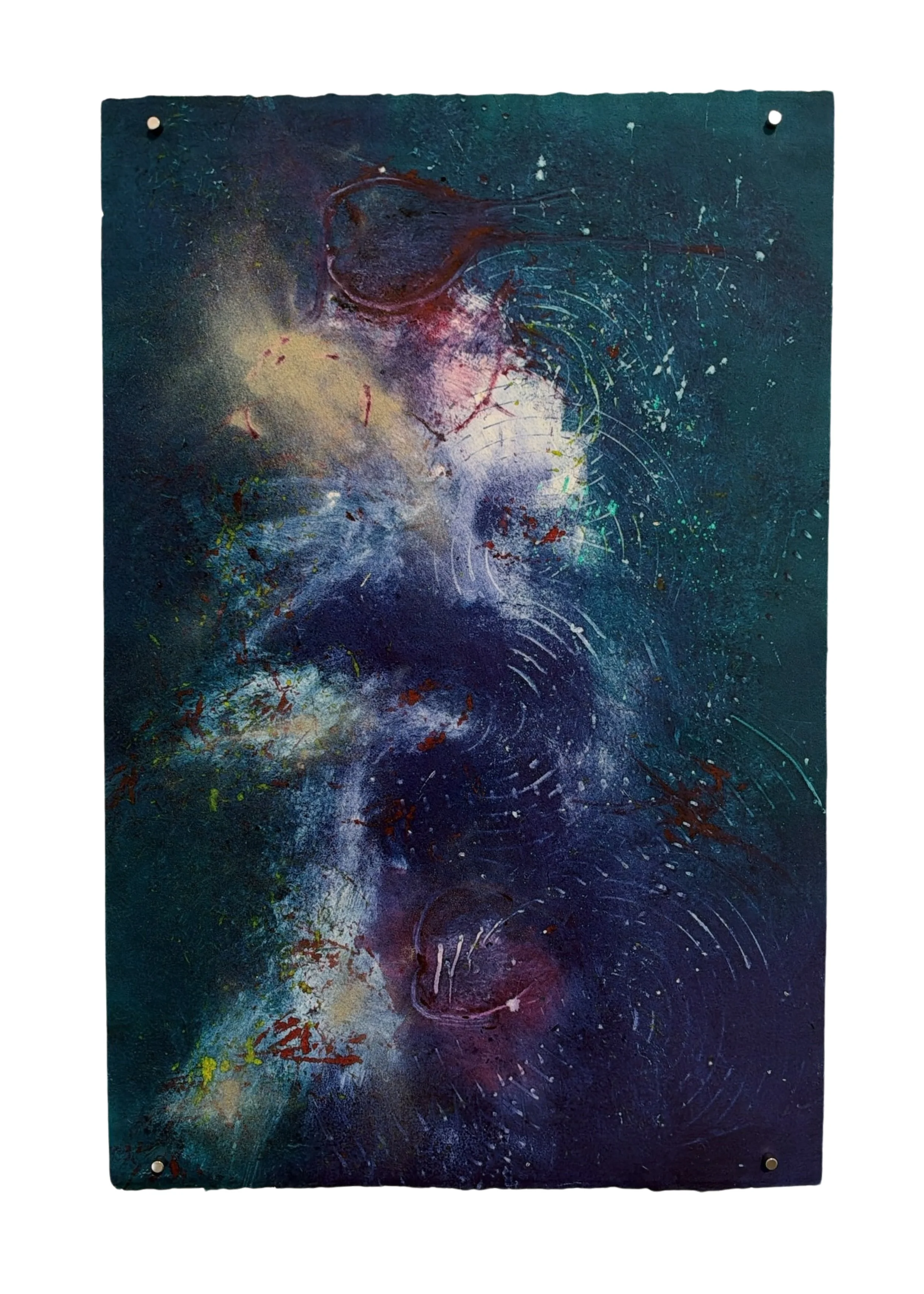
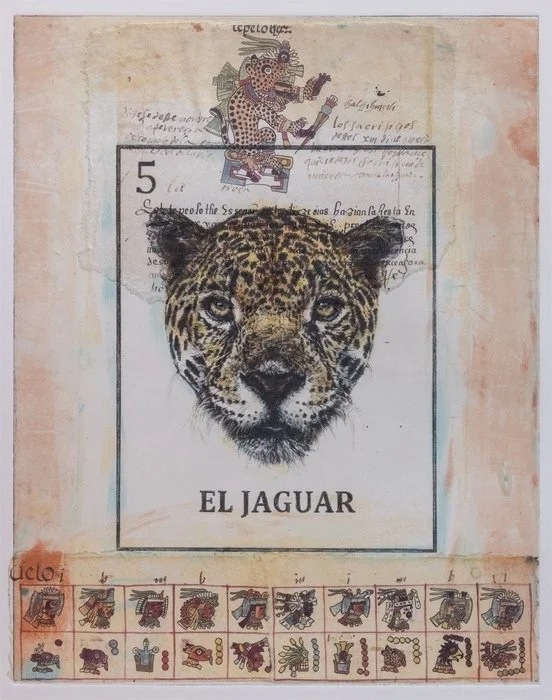
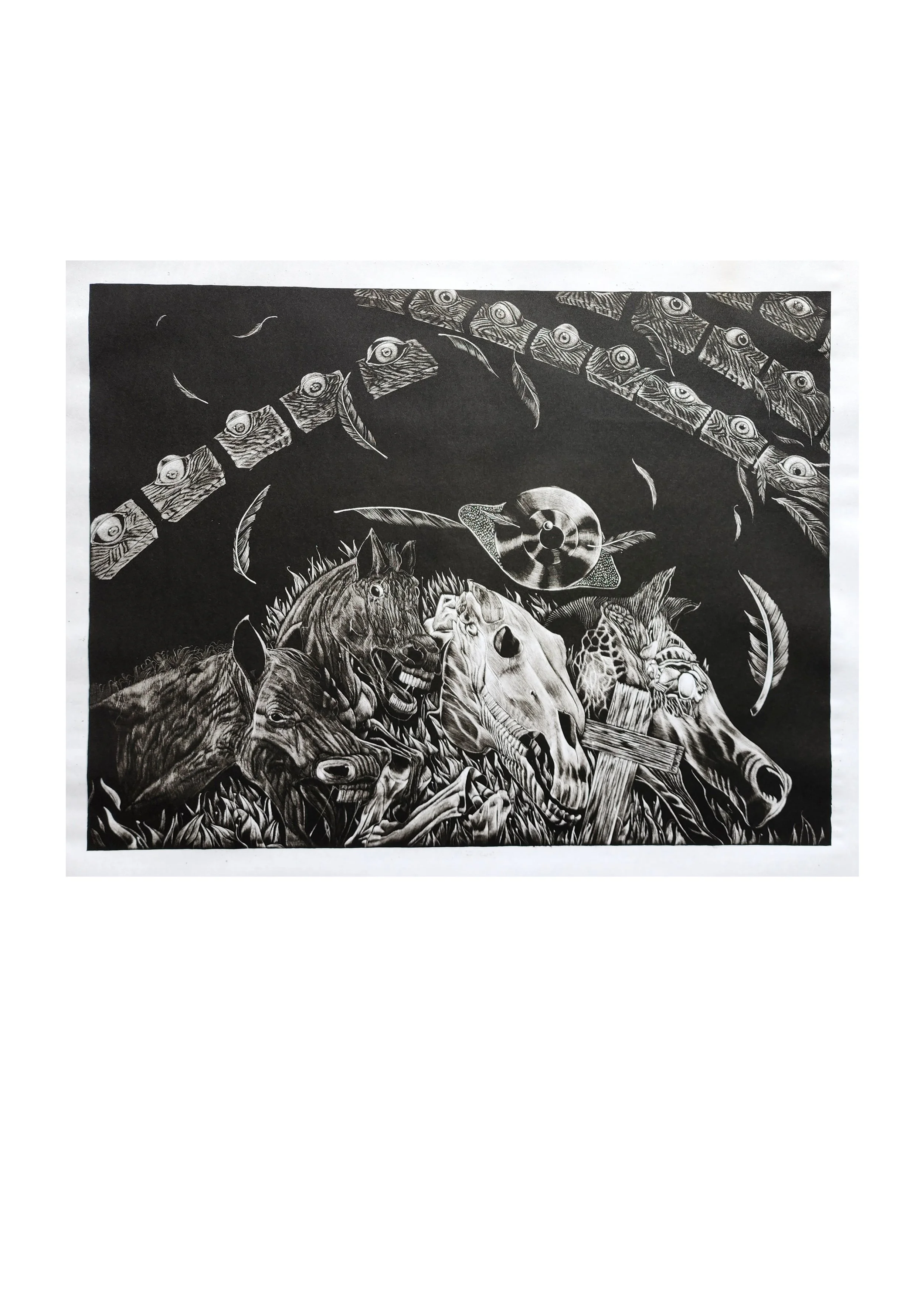
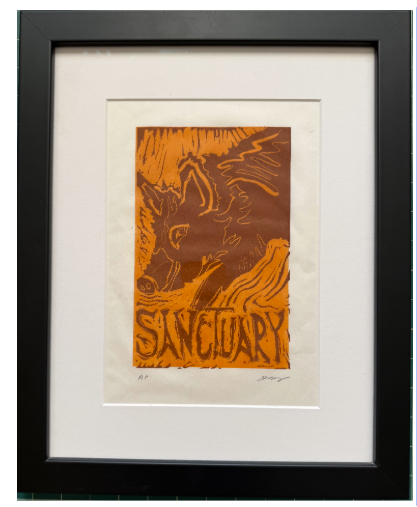
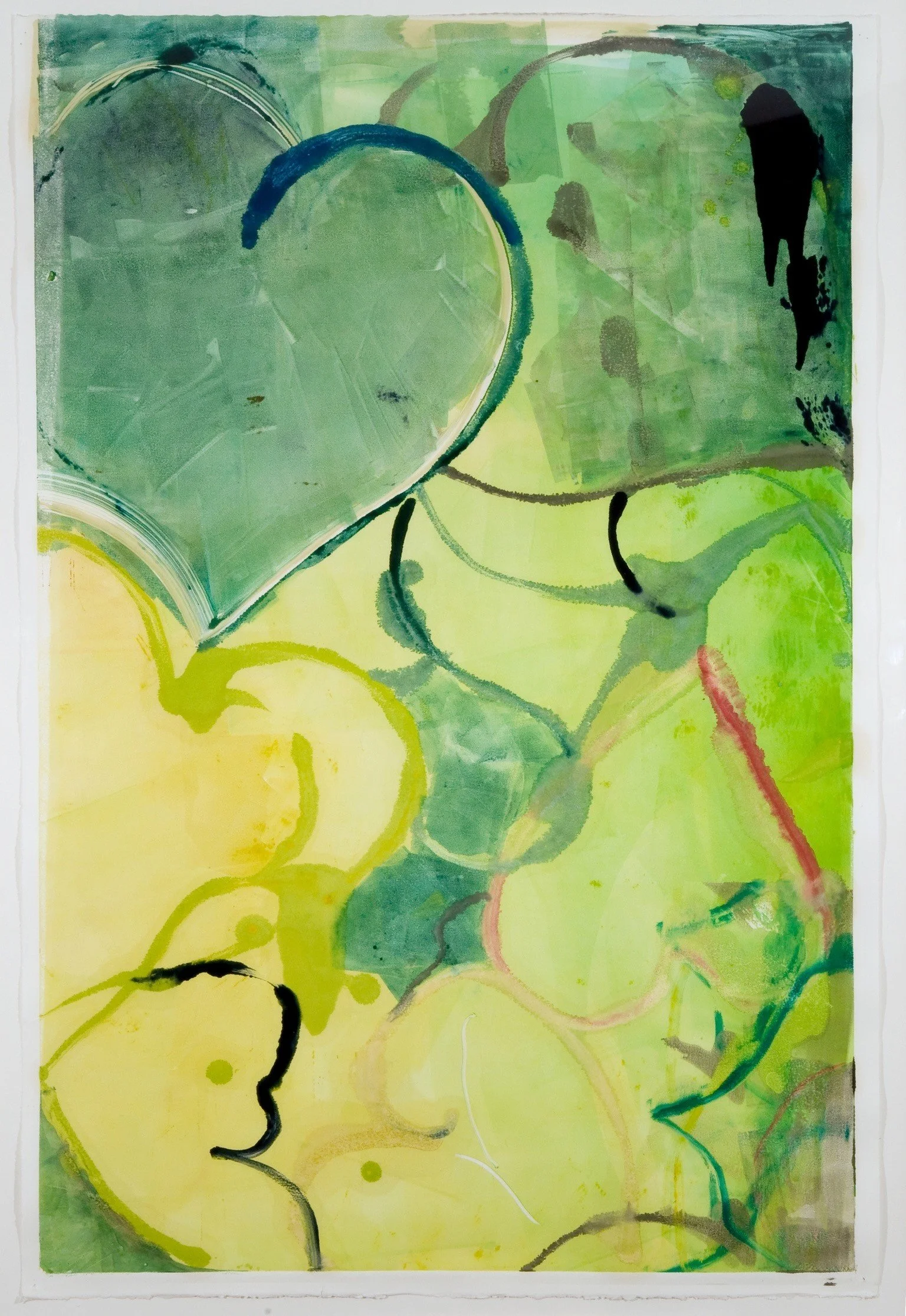
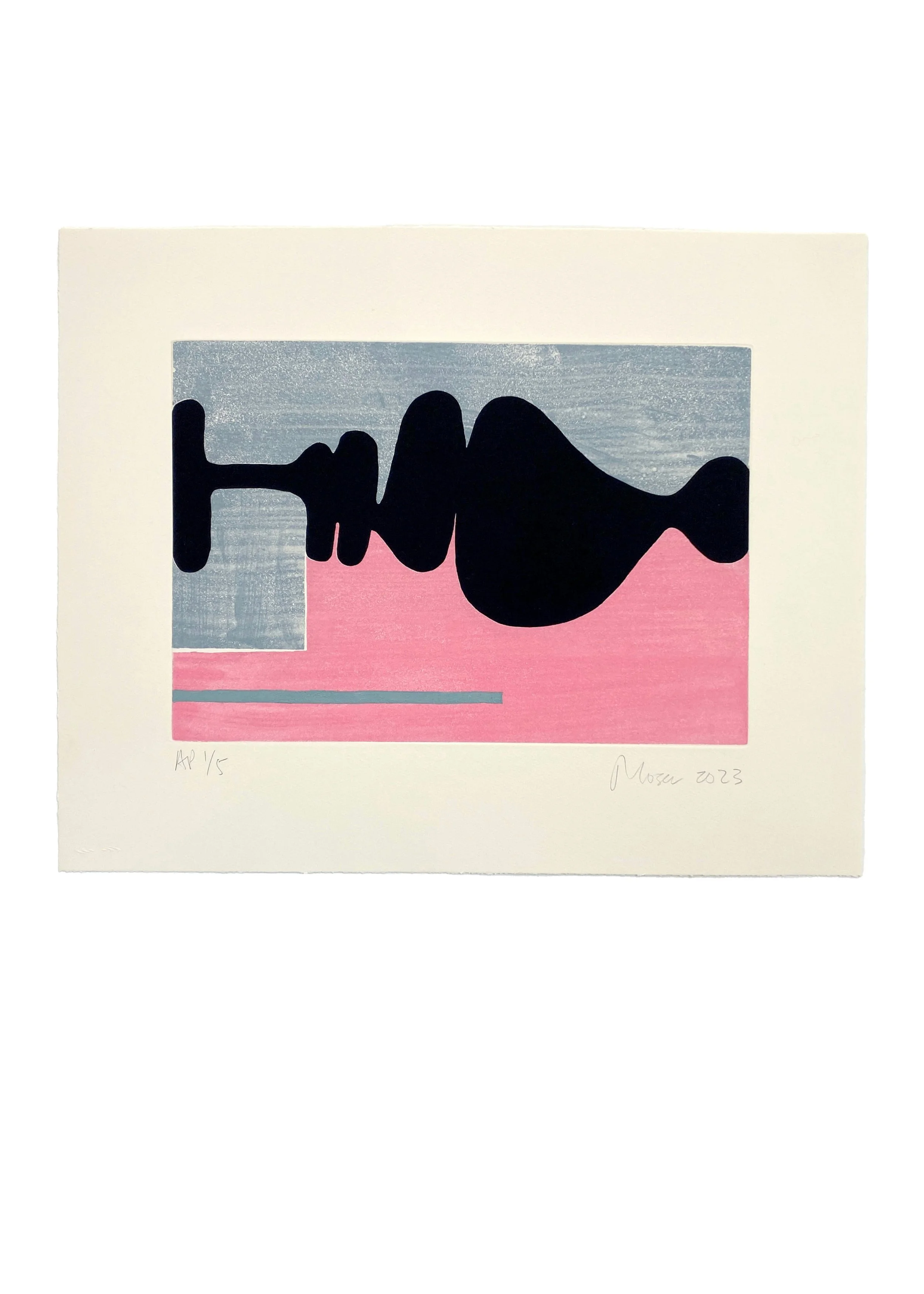
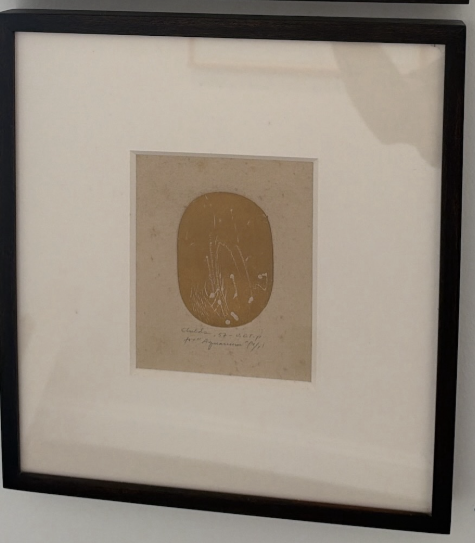
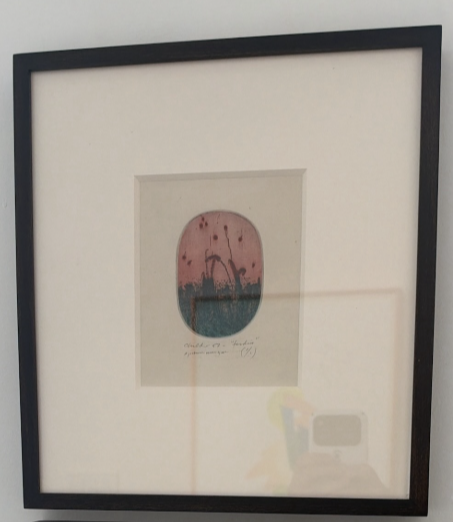
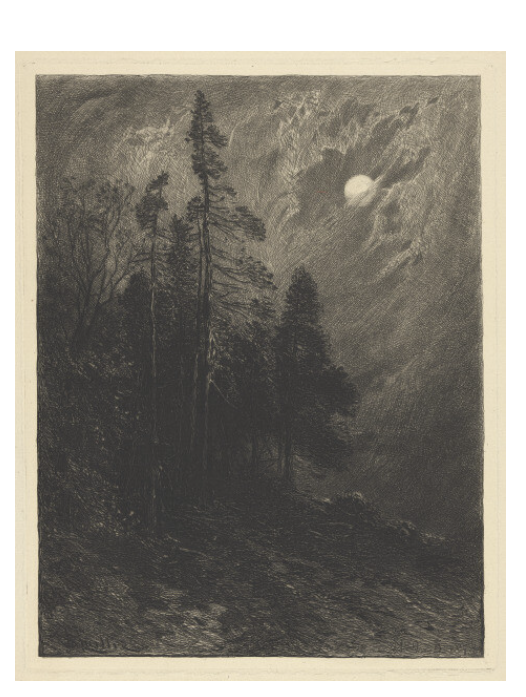
Glossary of Printmaking Terms
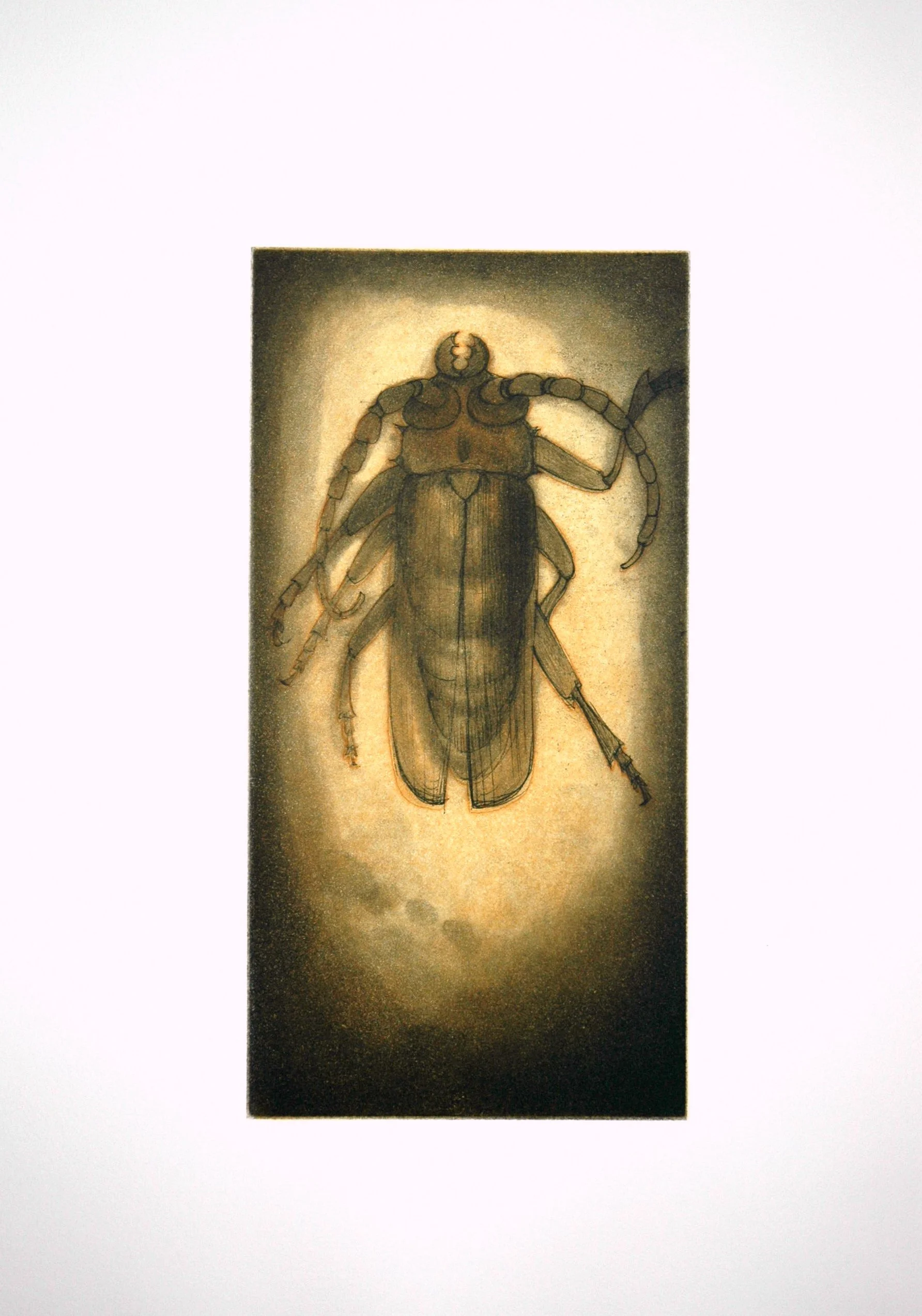
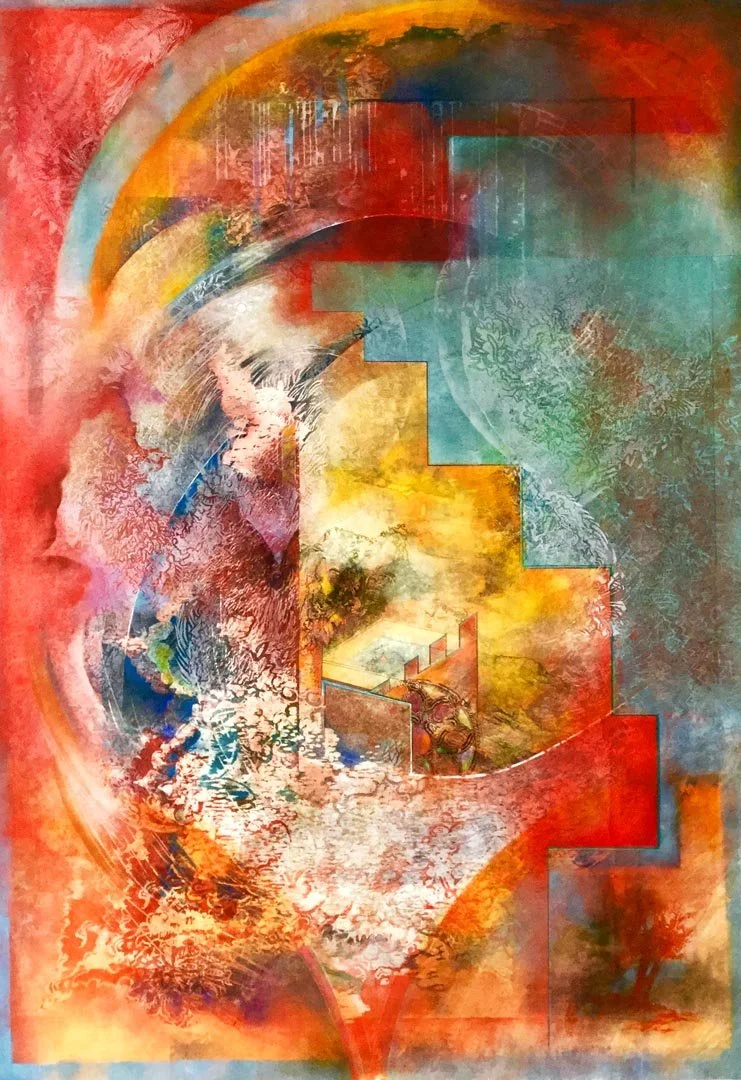
Aquatint: In Intaglio printmaking, Aquatint is a technique used to achieve tone. Finely pulverized rosin (crystallized pine resin) is dusted over the surface of a copper/zinc plate and heated to carefully melt onto the plate. The acid-resistant particles adhere to the plate, which can then be immersed in acid to create pitted depths. The length of time a plate is etched determines the tonal values achieved.
Burnishing: In Intaglio printmaking, a polished metal tool, a “burnisher”, is used to smooth an etched or scratched surface. Burnishing reduces the amount of ink a plate can hold in a given area. A burnisher can be used to create highlights in aquatints or erasures when working in drypoint.
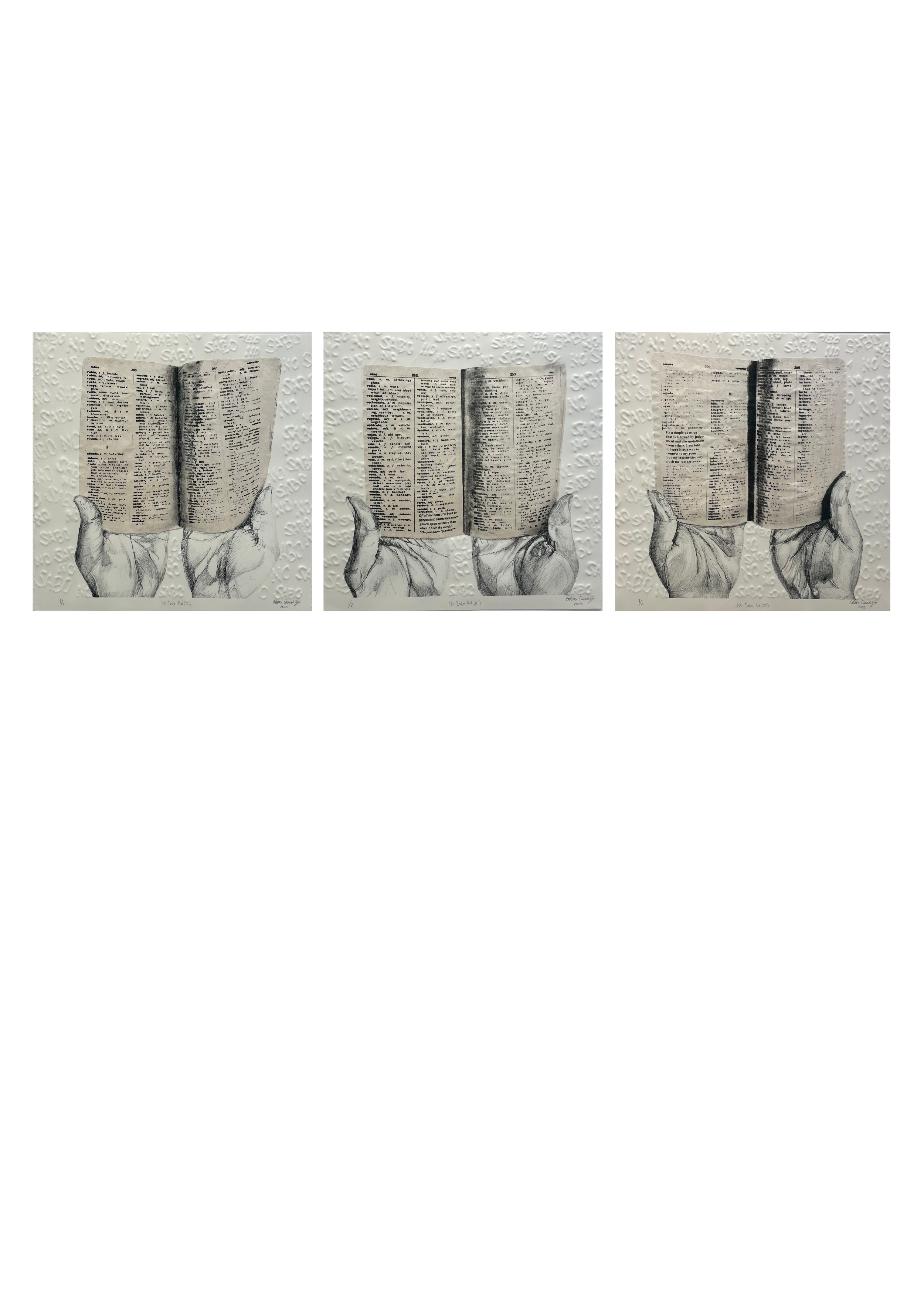
Chine Collé: Chine Collé is the process of adhering specialty paper (often lightweight Asian paper) to the printing paper simultaneously during the printing process. The chine colle technique is used in intaglio, lithography, and relief processes.
Collagraph: A Collagraph is an experimental printmaking technique where a collage of materials is created and glued over a rigid surface used as a printing plate. A wide variety of materials can be used to create the collagraph plate. A wide variety of tones can be created as a result of the plate’s highly textured surface. The plate can be wiped and printed as an intaglio print, as a relief print, or a combination of the two. Embossing is a tactile quality often inherent to collagraphs.
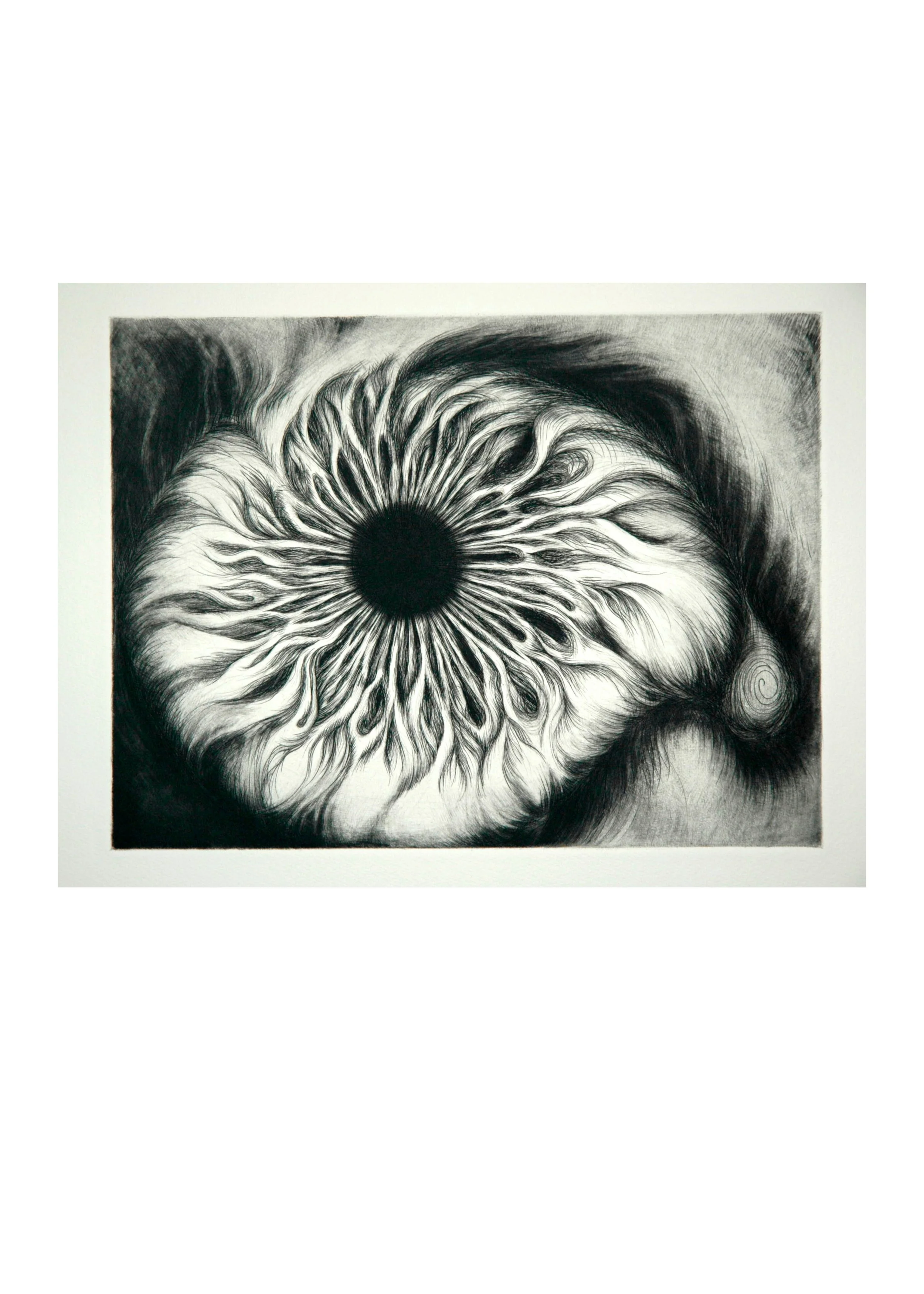
Drypoint: In Intaglio printmaking, drypoint refers to non-acid plate-making techniques. These include Engraving, Mezzotint, as well as abrading methods, for example, sandpaper, which create textures on the plate that in turn hold ink. Drypoint itself refers to the use of an etching needle, a steel, pencil-like shaft with a finely sharpened tip. Drypoint needles can also have diamond tips for extra hardness. In drypoint, the artist draws on the plate with a needle, creating incised lines and burrs from the displaced metal left behind. Drypoint lines can range from delicate and wispy to wide, rich, and velvety, depending on the size of the burr (which is controlled by the angle of the drawn line and the amount of pressure applied when drawing on the metal).
Deletion: The process of removing information on an intaglio plate or lithographic stone or plate. In intaglio, this is achieved by scraping, burnishing, and polishing. In stone lithography, it is achieved by abrading the surface, modifying the drawing with needles, hones, and abrasive materials, and etching with acidic solutions. In plate lithography, it is done chemically with an acidic solution.
Edition: An edition is the total number of “identical” impressions printed from a matrix in its final and resolved state. An edition is a finite number of impressions printed with consistency in regard to inking and printing quality on the same type of paper. Editions are signed and numbered with a fraction indicating the number of the print over the total number of prints in the edition. For example, 3/12 would indicate print #3 from an edition of 12 “identical” prints.
Engraving: Engraving is a traditional Intaglio technique in which an image is created on a copper or zinc plate by incising lines with a burin, a tool with a diamond-shaped steel point capable of gouging wedge-shaped lines into the metal surface. Engraved lines are clean and precise, and undulating line weights are possible by varying the pressure used when using the engraving burin.
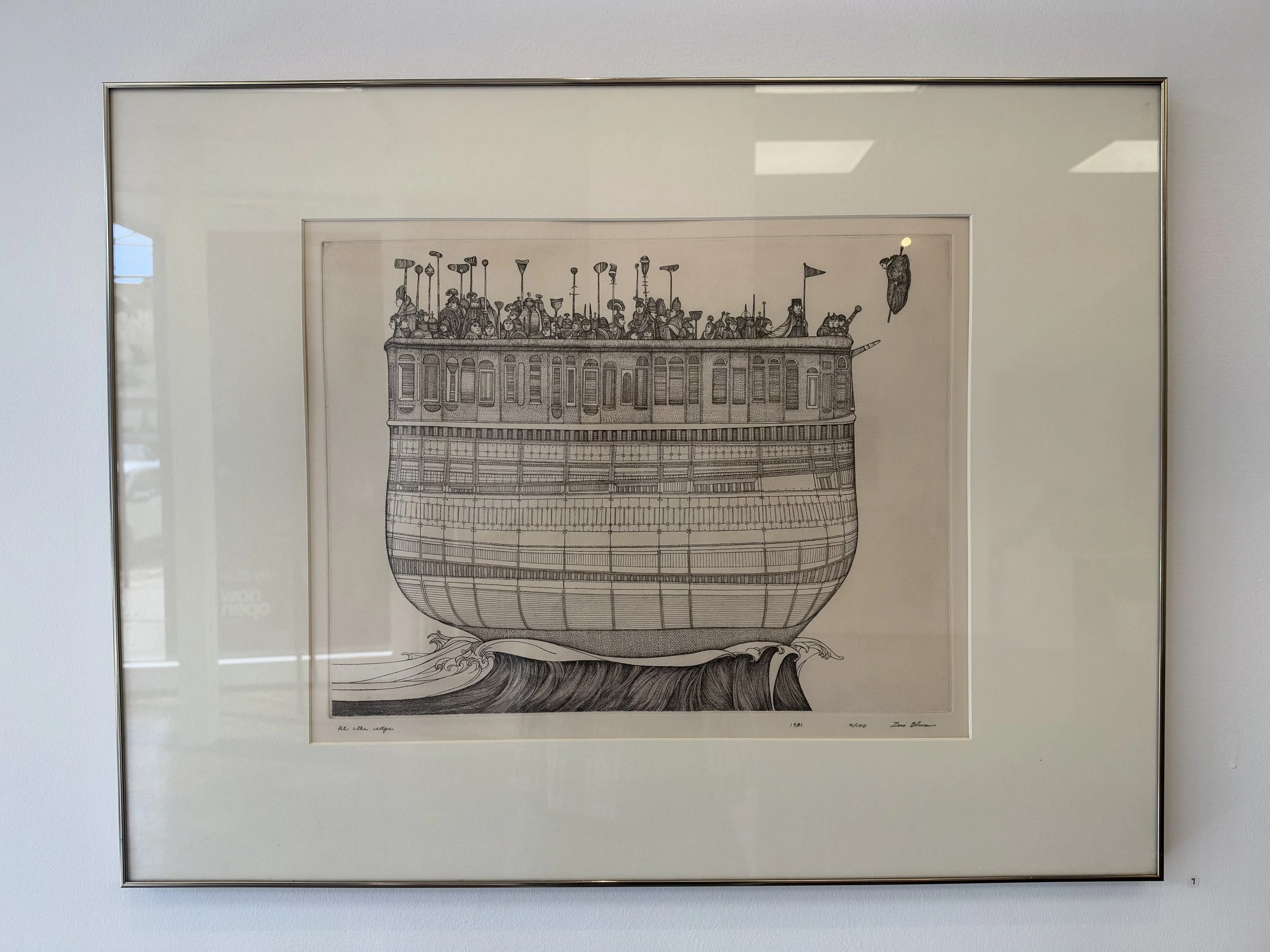
Etching: Etching is a broad term encompassing intaglio techniques that involve the use of acids or mordants to create incised lines or recessed areas, which will be capable of holding ink during the printing process. The depth of the etched areas directly determines the strength, or darkness, of the line or tone when inked and printed. Etching includes Hard Ground, Soft Ground, and Aquatint techniques.
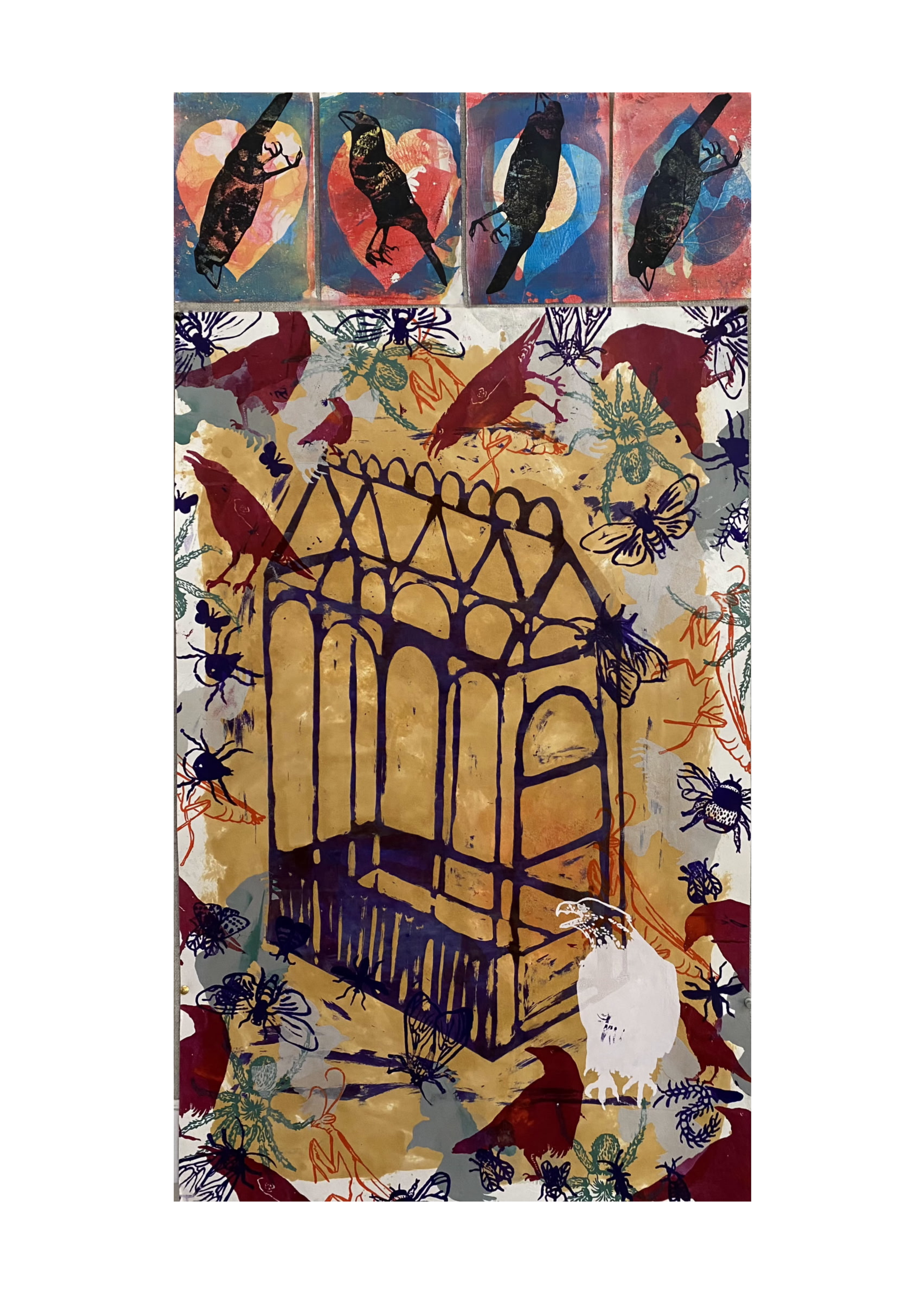
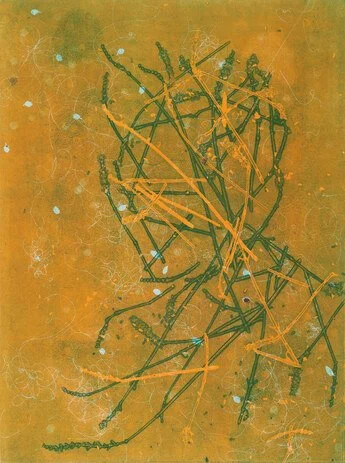
Gelatin printmaking: Gelatin printing is a form of Monoprinting, where printing ink or paint is applied to a flexible gelatin plate to create textures or patterns using tools or found objects. The image on the gelatin plate is transferred by manually rubbing the back of the paper surface onto the gelatin plate.
Ground: In Intaglio printmaking, a ground is an acid-resistant solution made of a combination of ingredients, including bitumen, rosin, and wax, used to protect areas of the plate when exposed to acid.
Hard ground: In intaglio printmaking, the hard ground process is essentially a linear technique. A copper or zinc plate is covered with an acid-resistant ground which dries to a hard, stable layer. Artists draw lines through the ground with a steel needle, exposing metal, which is then etched in acid to varying depths, creating different tonal values within the lines themselves. Tonal areas are achieved through cross-hatching.
Intaglio: Intaglio is an umbrella term used in printmaking to identify printmaking techniques for working on metal, especially copper and zinc, as well as drypoint on Plexiglas. Intaglio techniques include Etching and Drypoint techniques. Specific etching (acid- using) techniques include Hard ground, Soft Ground, and Aquatint. Drypoint techniques include: Drypoint, Engraving, and Mezzotint. These are non-acid techniques used to create images on a plate. On an intaglio plate, the image exists below the surface of the plate.
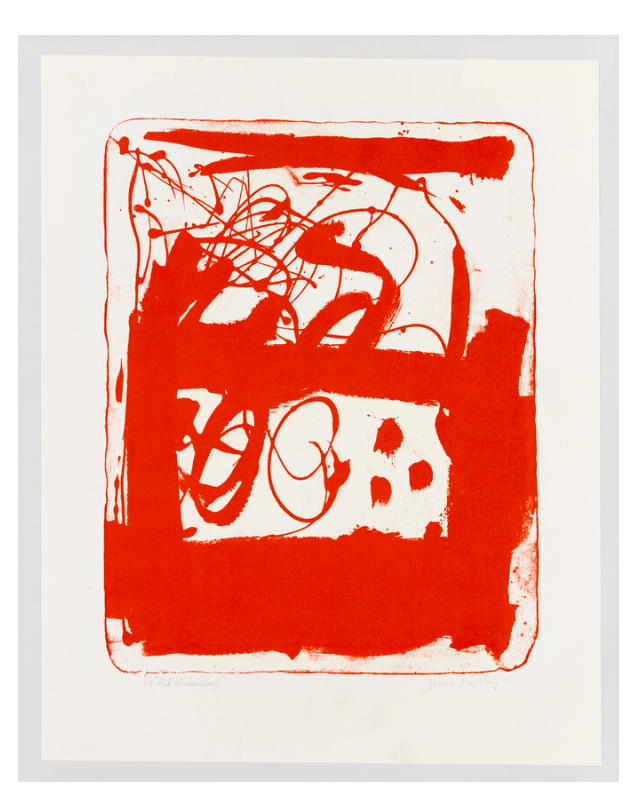
Lithography: Lithography is a “planographic” printmaking process where the image exists on the surface of the plate or stone. It is based on the antipathy of grease to water. An image is drawn on a receptive surface, either stone (polished Bavarian limestone) or aluminum plates treated to obtain a stone-like surface. Using greasy drawing materials to develop an image, the non-image areas are desensitized so that they attract water, while repelling greasy printing ink. Maintaining a chemical balance in these relationships allows the stone to be inked repeatedly while keeping the non-image areas damp; thus, many impressions of the image can be printed.
Matrix: A printmaking matrix refers to the primary physical surface that holds the etched, drawn, or carved image. Matrices include plates for intaglio techniques, stones or plates for lithography, or wood or linoleum blocks for relief processes and mesh screen for silkscreen.
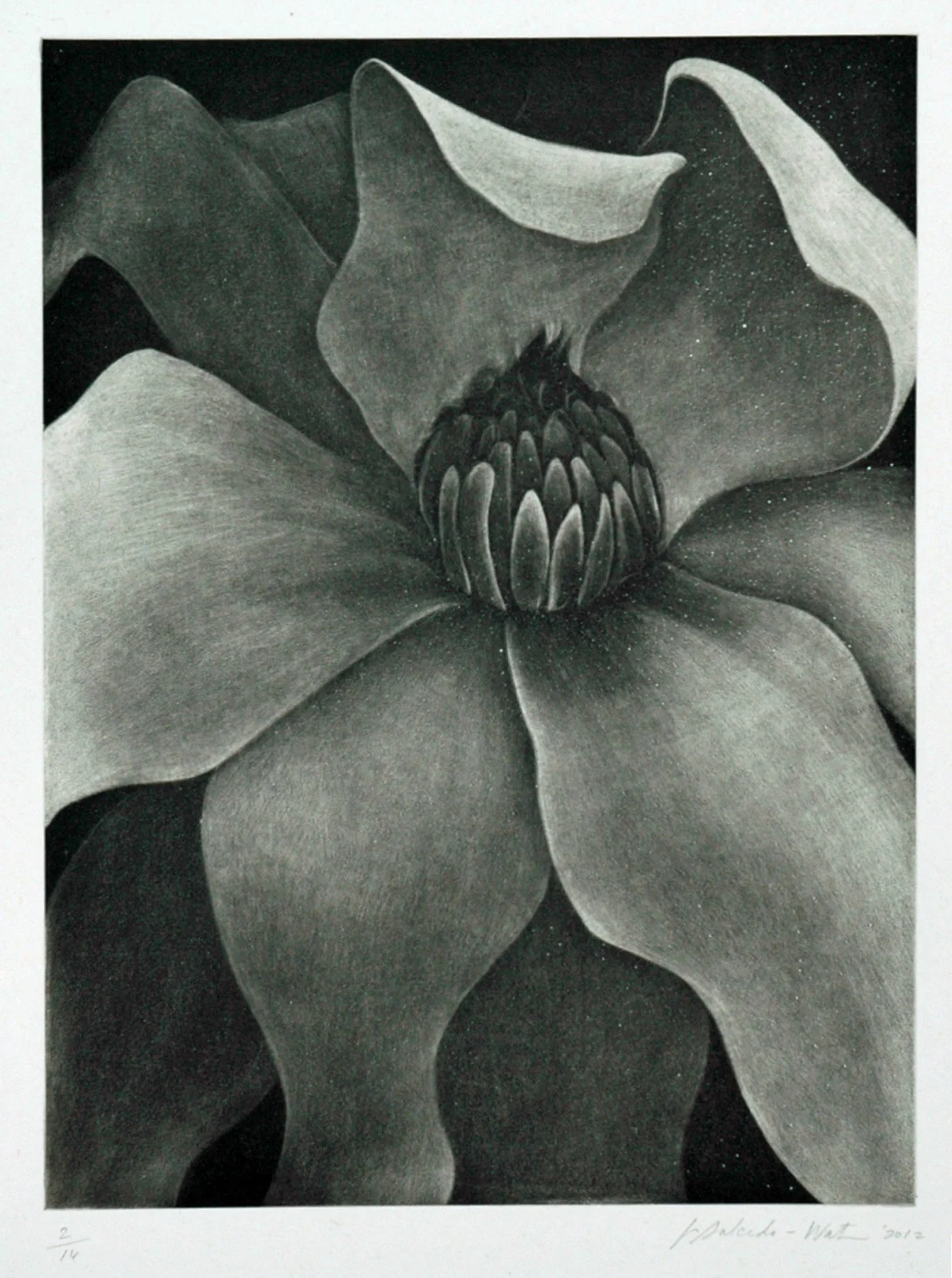
Mezzotint: In intaglio printmaking, Mezzotint is a traditional drypoint technique where a “mezzotint rocker,” a steel tool consisting of a shaft with an arc-shaped edge with pointed “teeth,” is rocked back and forth over the surface of a copper or zinc plate to yield lines of small indented pits with burrs. The plate surface is meticulously roughened with the rocker to hold a velvety, rich layer of ink. The image is created by scraping and burnishing areas to develop highlights and define the image through deletions. Mezzotint was a precursor to the use of Aquatint as a technique used to create continuous tonal areas.
In Lithography, the Mezzotint technique consists of developing the image by reductively drawing highlights on the stone surface to create the drawn image using needles, hones, and scrapers to reveal the exposed stone areas, which are then etched to remain open during the printing process. Mezzotint is also referred to as “Manière noire” in both lithographic and intaglio processes, where the artist develops the image by working from dark to light.
Monoprint and Monotype are terms often used interchangeably, referring to the creation of a unique image on a plate, using painted or rolled ink with unique tonal and textural possibilities. The main difference is in whether or not it is used in conjunction with a fixed image on another plate or block (matrix).
Monoprint: Monoprint is a printmaking technique where imagery is freely developed on the surface of a plate with printmaking inks and paints, using brushes, brayers, rags, and a variety of objects for developing additional information on a separate surface to be printed with an existing plate. Monoprinting is done in conjunction with a block or plate created on another printmaking matrix
Monotype: Monotype is a printmaking technique where imagery is freely developed on the surface of a plate with printmaking inks and paints. Brushes, brayers, rags, and a variety of tools and objects can be used for developing interesting textures. The prepared plate is then run through a printing press with dampened paper. Transferring the image off the plate and onto the paper. The monotype is a unique print. A “ghost” impression can be printed from residual ink remaining on the plate from the first impression.
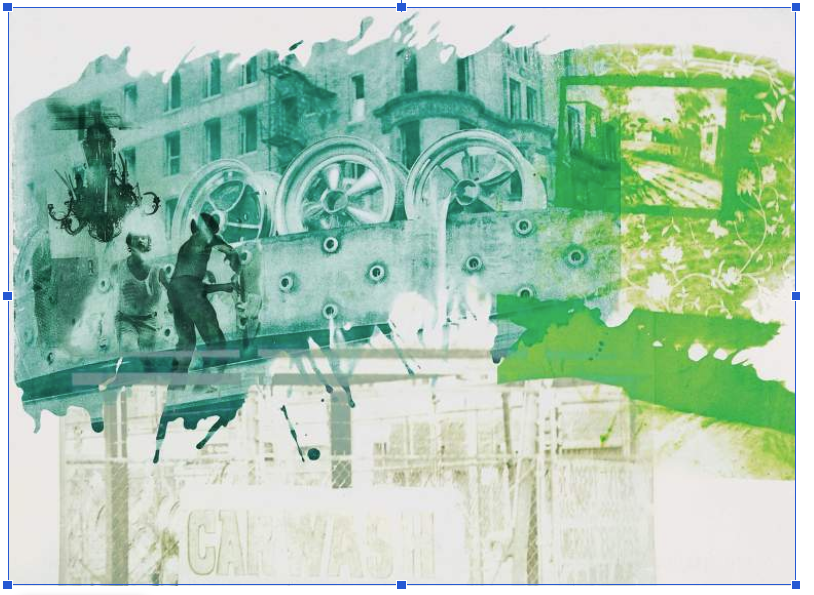
Photogravure: Photogravure is a historic intaglio technique where a photographic image is exposed onto a light-sensitive gelatin emulsion, which is adhered to an aquatinted copper plate while in a darkroom. It is carefully dried under controlled humidity, and subsequently methodically etched in several acid baths. After being etched, the plate is printed in the manner of an aquatinted plate.
Printing: Printing is the process where, after a matrix is prepared by using various printmaking techniques, it is passed through a press under pressure, yielding an impression of the etched, drawn, or carved image.
In Intaglio, ink is applied to the plate and wiped into the surface grooves and textures. Dampened paper is placed over the plate; it is then covered by felt blankets and run through an etching press. The paper is pressed into the ink-holding grooves and surfaces, yielding a “print”.
In Lithography, the plate or stone is rolled up with greasy ink through a thin layer of water. Ink is held in image areas, and water is retained in non-image areas. Paper is placed over the plate or stone, followed by a layer of additional paper and a stiff synthetic sheet called a tympan, which, when lubricated, allows the stone to pass through the press under pressure to yield an impression of the image from the stone or plate matrix.
In Relief printmaking, the linoleum or wood block is inked with a brayer, paper is placed over the printing surface, and it is run through a press, receiving enough pressure to make contact with the surface and yield an impression. The relief block can also be printed manually by using a “baren”, a disc-shaped tool with a handle, to apply pressure to the back of the paper surface onto the inked woodblock to yield an impression.
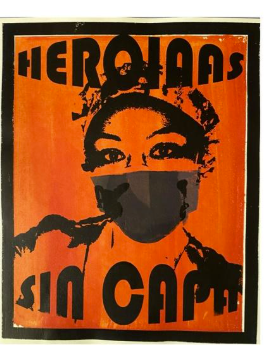
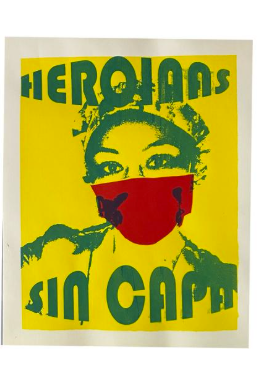
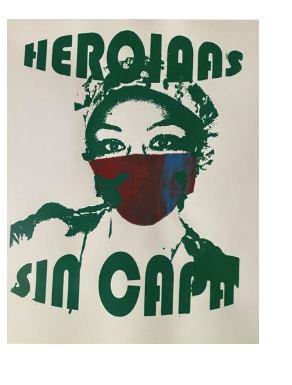
In Silkscreen, a stencil-based image is printed by using a squeegee to force ink through a mesh screen onto the printing surface, usually paper or fabric.
Proof: A proof is an impression or print of an intaglio plate or lithographic stone or plate, printed as part of the process of developing an image in the printmaking medium.
State Proofs are printed to punctuate the different phases of a print’s development through the plate-making process.
Artist’s Proofs are often unique prints that can vary from the consistency of an edition. They can vary in paper, color, or wiping technique. They are often prints that are pulled in the process of developing an image.
Printer’s Proofs are prints given by the artist or workshop to the primary printers involved in the collaboration and editioning process of another artist’s work.
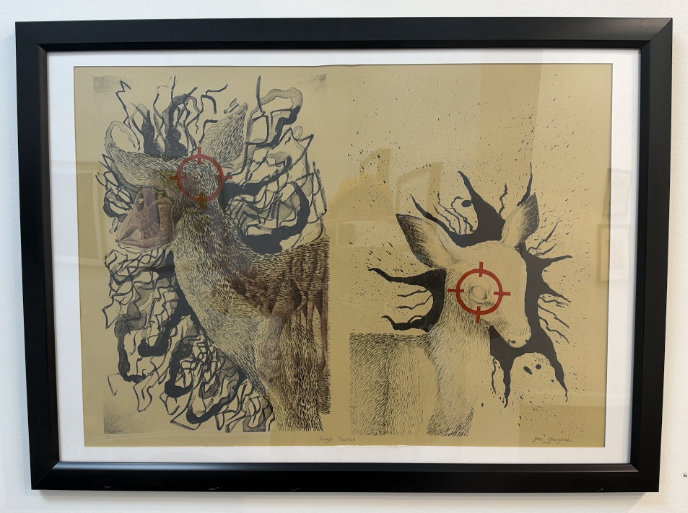
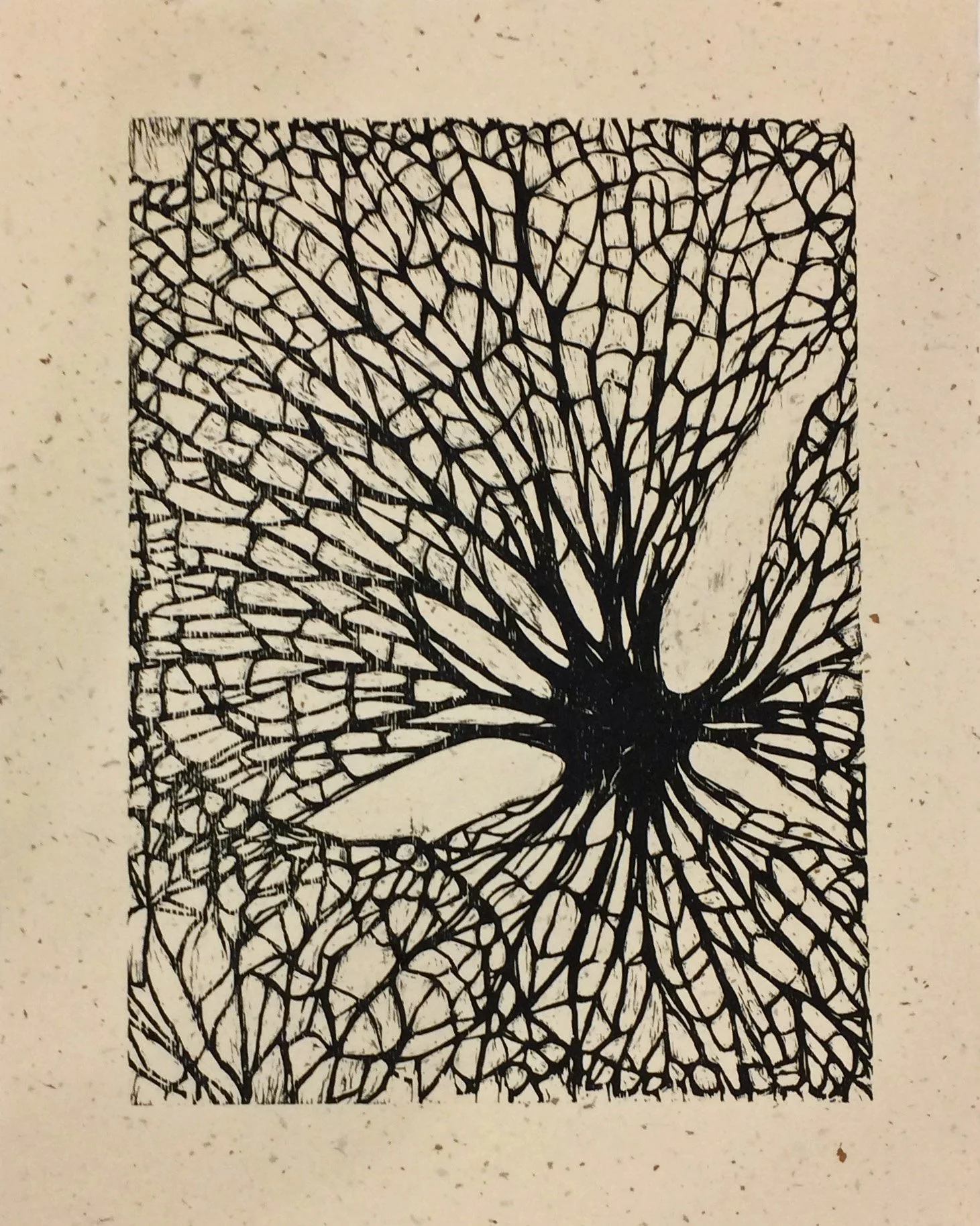
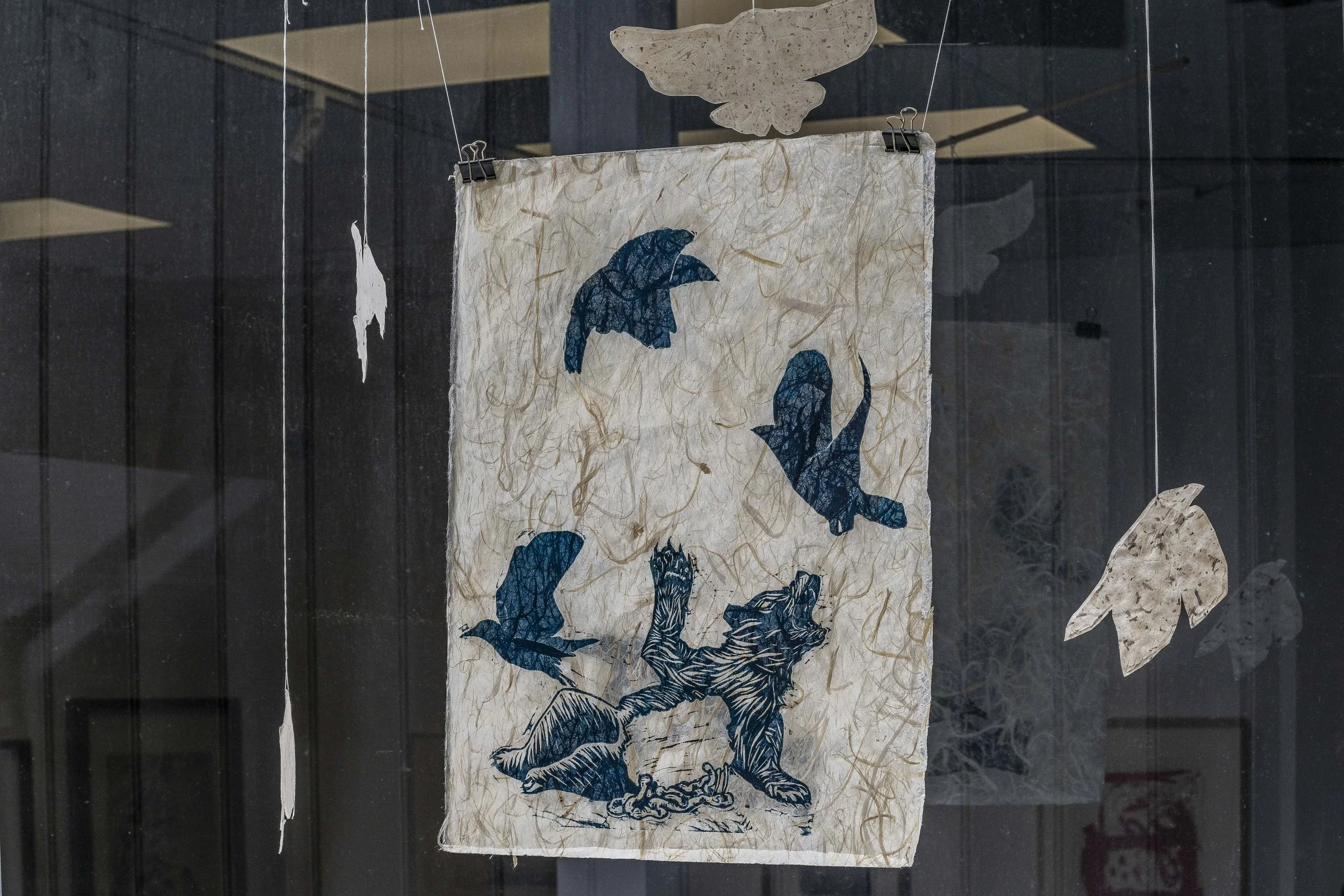
Relief Printmaking: In Relief printmaking, an image is drawn onto a matrix, either linoleum or wood, and is developed by carving away areas that are not intended to hold ink. The printed image exists on the surface of the block, which is rolled up with ink, and printed onto paper or another surface.
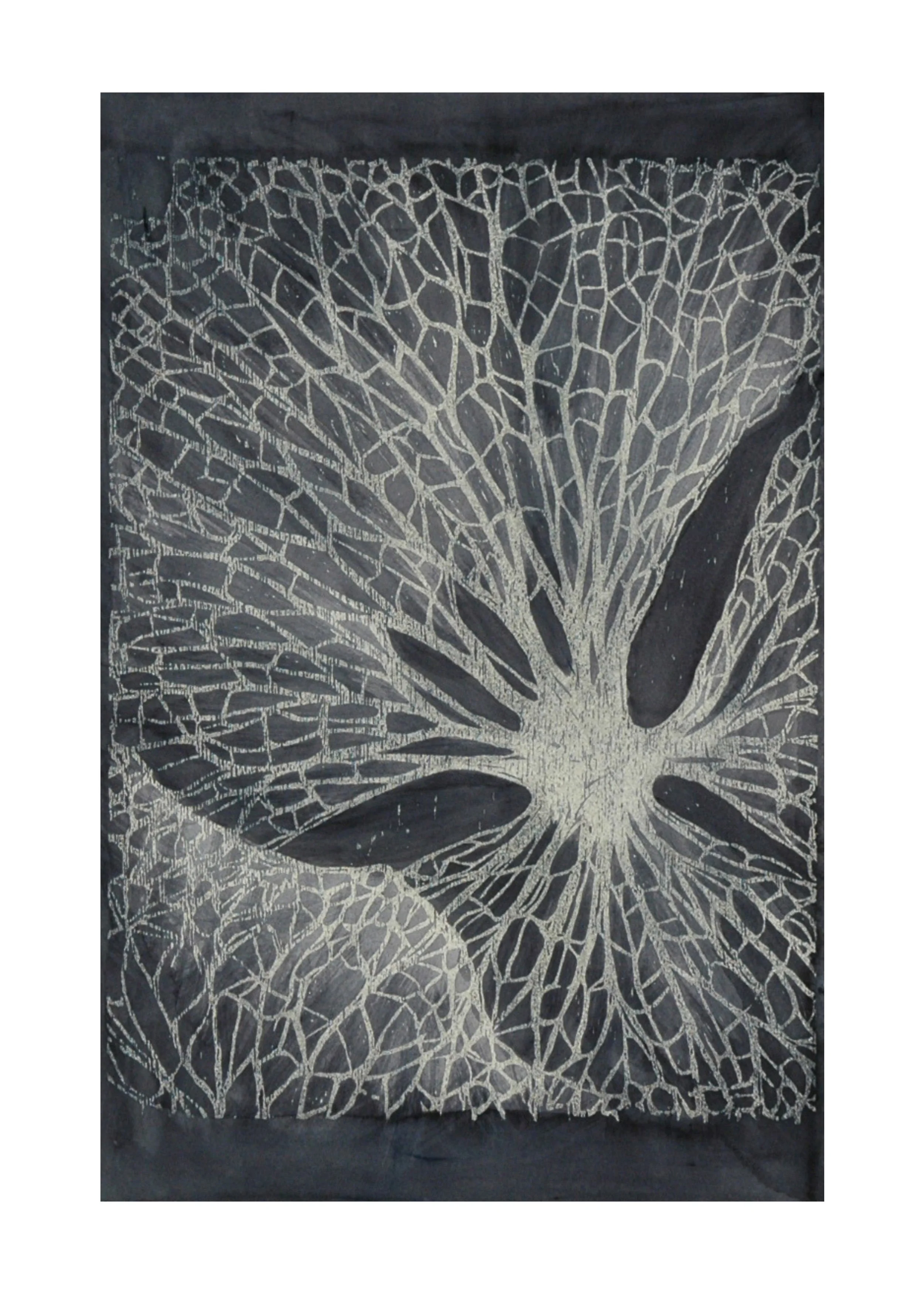
Silk Aquatint: Silk-aquatint is a collagraph technique, where an image is developed sculpturally on the surface of the plate, or matrix. In a silk aquatint, a delicate silk-like fabric is adhered to the surface of a plate, which, if printed as- is, would print a solid black. The surface is then painted over with a polymer-based material. The image is created by painting layers over the surface to reduce its porosity, therefore making it capable of printing gradations of lighter tones, depending on the number of painted layers applied. Painterly effects, such as brush strokes, are possible.
Silkscreen: Silkscreen is a stencil technique where an image is drawn (with drawing fluid) or (photographically exposed onto a sensitized emulsion) on a screen with a fine mesh fabric. The image is printed by forcing ink through the mesh with a squeegee and onto the printing surface.
Soft Ground: In intaglio printmaking, Soft Ground is an acid-resistant ground with wax or grease added to prevent it from hardening. Drawings are made through thin tracing paper (rather than directly on the ground) onto the grounded plate and etched to create textured lines resembling pencil marks. The soft ground is also sensitive to capturing impressions of objects or materials pressed onto the surface.
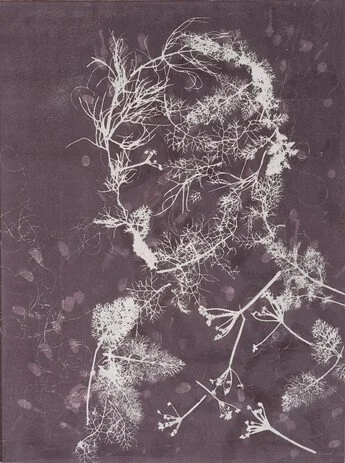
Solar Plates: Solar plate printmaking is a technique that uses steel-backed polymer plates that harden when exposed to ultraviolet light or sunlight. It is a process that does not use solvents, grounds or acids as in traditional printmaking techniques. Photographic images on transparent film, or hand-drawn images on frosted mylar or ground glass are placed on the polymer plate and exposed to light. The exposure hardens areas of the plate proportional to the tonal areas on the film. The plate is then washed with water to remove the unhardened plate areas, which will be lower in profile than the hardened areas. The plates can be exposed for relief printmaking or for intaglio printmaking. By using an aquatint screen to embed a dot pattern, continuous tone in photographic images is made possible. The plates can be printed as an intaglio print or a relief print, or a combination of the two.
Spit-bite: Spit-bite is an etching technique used for “biting” aquatints with acid. Rather than immersing a plate in a bath of acid or mordant, the acid is applied manually with a brush. A solution of the acid is combined with saliva to break the surface tension of the acid on the aquatinted plate. The technique yields a smoky or drip-like quality, depending on how it is applied. The tonal values are determined by the length of time the acid remains on the surface of the plate. Spit-bite is often used to create atmospheric tonal effects.
State: A state is a phase at which an impression is printed to document specific changes made to the information on a plate or stone matrix.
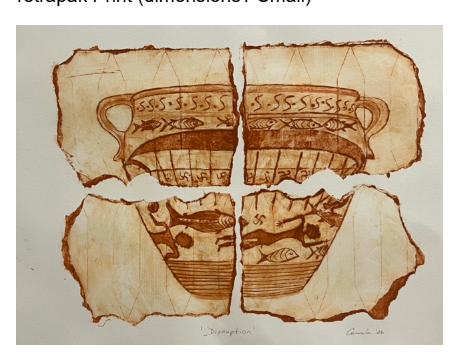
Tetra Pak: Tetra Pak printmaking is an intaglio printmaking technique that uses recycled beverage cartons as a replacement for metal etching plates. Artists use drypoint needles for line work, and scalpels or knives to cut away the carton’s foil interior surface to create tonal areas that resemble aquatint tones. Plates are wiped and printed in the same manner as intaglio prints.
Tint Roll or Gradation Roll: In intaglio, lithography, and relief printing, a tint roll is a technique where a transparent layer of ink is rolled onto the surface of a plate to achieve an overall layer of tone.
A gradation roll or rainbow roll is a technique where the ink is rolled onto the printing matrix or on a secondary plate with the ink colors varying in “value” (lightness or darkness) or “hue” (color) over the surface of the plate. “Ombre” or “rainbow” effects can be created by using large rollers or multiple brayers to carefully distribute the ink on the plate.
Inquire about a print
Some artwork on view may have additional prints available. Please fill out the form, email gallery@eastendarts.org, or call 631.727.0900 to inquire about availability.