
 Image 1 of 1
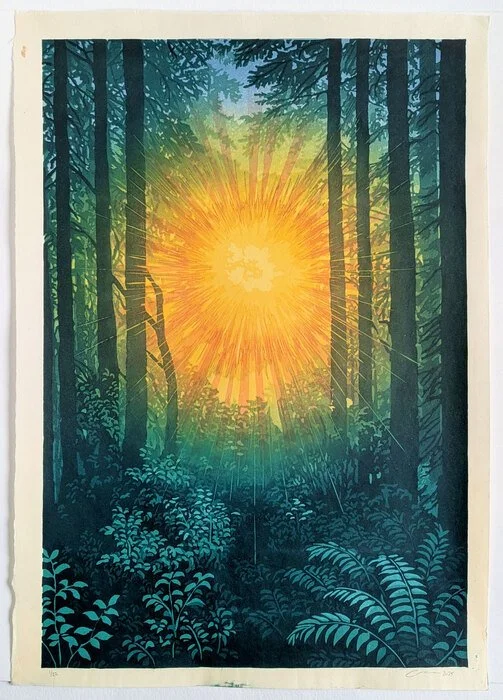
Much like a reduction print, memories are built with bits and pieces of moments, small seemingly unimportant details coalesce to form an image, an event, a snapshot of a place or feeling. When starting an image, I begin with a field of color, a mood, atmosphere, time in space that affects everything coming after it. Out of this construction a memory emerges, imprinted. In much of my work, I look to explore the emotional resonance within our shared landscapes and the historical images that become part of our collective understanding of the environment through the images we choose to preserve, revere and display in our treasured collections and museums. Poetry is an integral part of my practice, created alongside each print to deepen the connection between visual and verbal language. Just as a poem condenses emotion into a few carefully chosen words, mokuhanga (Japanese woodcut) captures experience through layers of ink and carved impressions. The interplay of these two forms constructs a space where history, imagination, and lived experience converge, reinforcing the themes of memory and place within my work. The appeal of mokuhanga lies in its balance between simplicity and complexity. Utilizing water, wood, paper, and pigment, the process remains accessible and non-toxic while offering a vast range of expressive possibilities. The inherent qualities of the medium—its subtle textures, delicate gradations, and nuanced layering—allow for a visual language that feels both timeless and contemporary. This methodology has reshaped my approach to image-making, shifting my role from one of control to one of collaboration with the materials.