
 Image 1 of 1
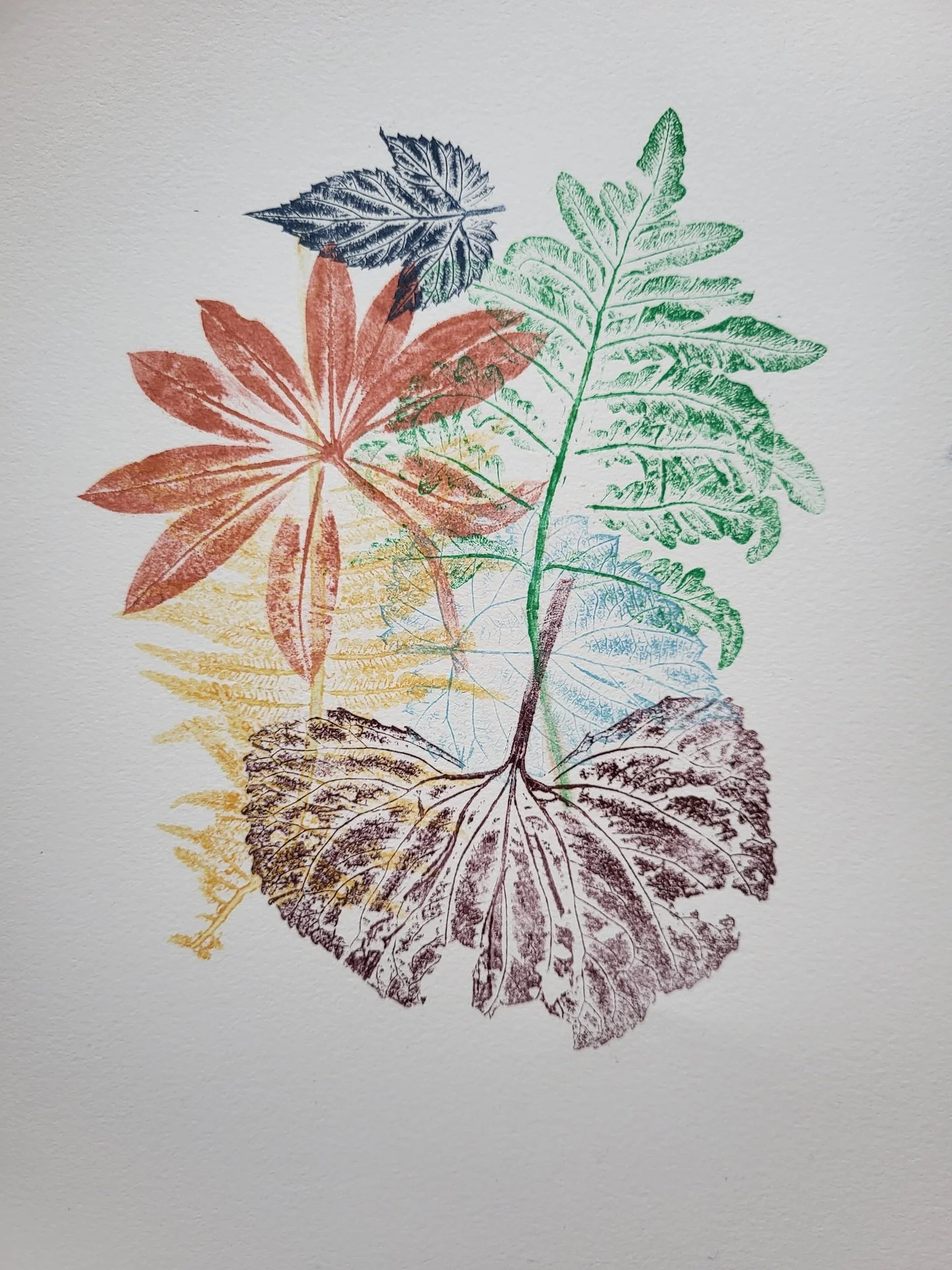
Printmaking has been my primary medium since I discovered it at college. I love the snappy contrast of black ink on white paper. A good print can encompass delicate details, multiple textures, and intricacy within simplicity. It may also be used to tell a story or create an atmosphere. Although I have sampled many techniques, linoleum cutting is the bedrock of my artistic practice. Even though relief printing is one of the simplest forms of printmaking, there are still many technical decisions involved such as gauging the correct pressure, choosing the right paper, determining the correct viscosity of the ink. Black and white prints may be enhanced by hand coloring or left as is, each composition is different than the one before. Gelatin printing is another technique I have adopted. It is non-toxic and it does not require a press. A monoprint can be produced in an afternoon or over the course of a few days. An artist can incorporate interesting materials such as lace, leaves, bubble wrap, etc. My artwork has been influenced by a myriad of experiences. Gardening stimulated me to make the two gelatin prints that include ferns, hops, and lupins, among other plants. Naturally, I have also studied the work of graphic artists such as Felix Valloton and Elizabeth Catlett. I am grateful to the teachers at Manhattan Graphics for sharing technical knowledge and offering practical advice. One teacher advised me that “When you roll out the ink it should be such a thin layer that it sounds like the hissing of baby snakes.” I especially enjoy spending time in shared studio space with other printmakers. The encouragement I have received in that environment has been vital and I have tried to pass it along. The fun of printmaking comes from the wide range of choices available. My next project could be making a collagraph, cutting a new block, or adding a xerox transfer on top of a monoprint.