
 Image 1 of 1
2026
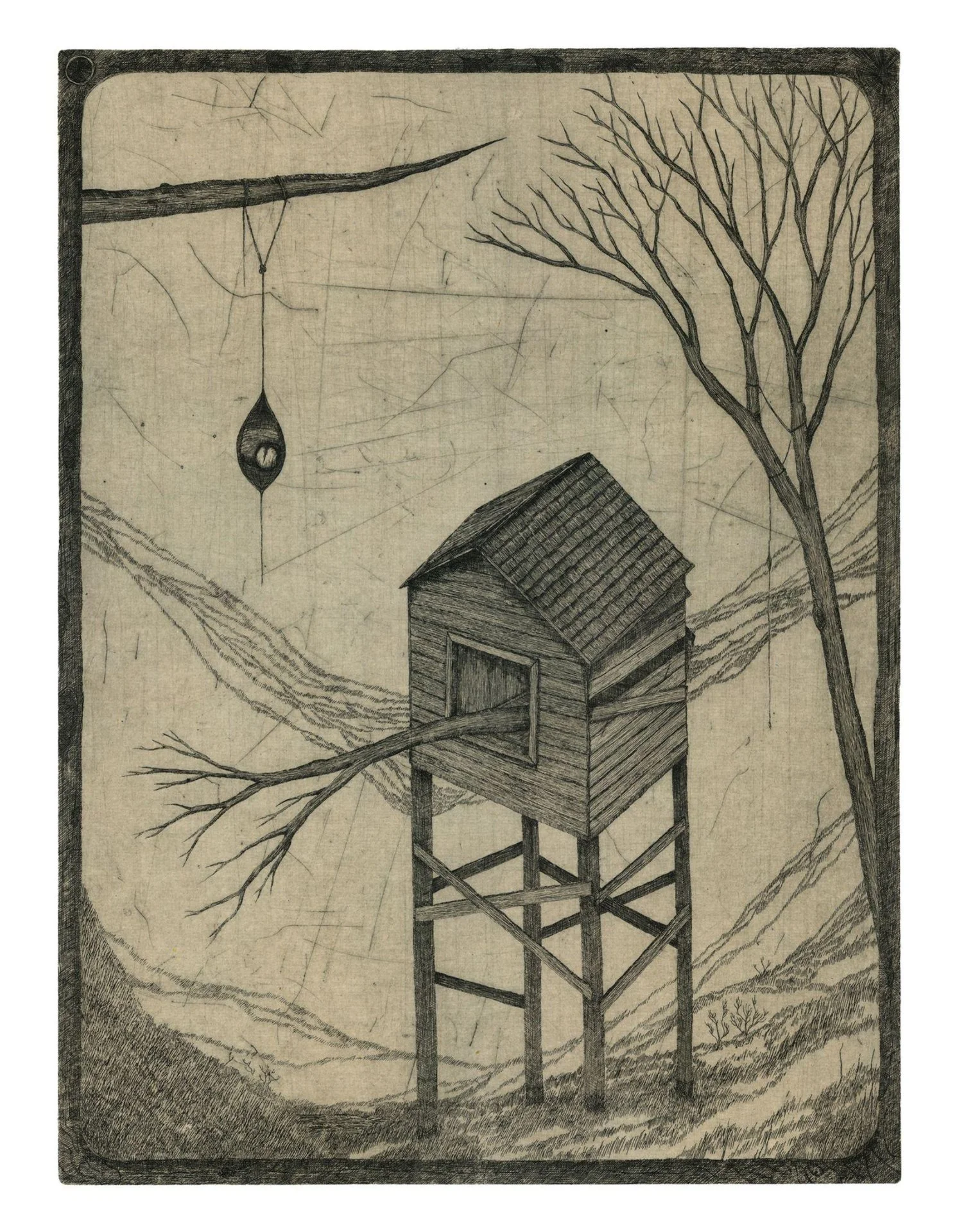
Intaglio, Kitikata on BFK Rives
12” x 9”
My prints are a retelling of my travels between the Midwest and Appalachia. Since relocating to Knoxville from Detroit, I utilize printmaking processes to meditate on the magnetism of Appalachia and longings for the stability of its natural landscape. In our car-dependent culture, we feel integrated with natural spaces and unbound when traveling along interstates and across vast expanses of land. Yet, the land is rarely public nor protected, often owned by anonymous entities and completely inaccessible. This work synthesizes my research of Appalachian and Southern Gothic literature. Themes of mystical realism found in novels such as Cane by Jean Toomer and Ceremony by Leslie Marmon Silko have been informative to how I approach historical and political narratives that disconnect humanity from our natural surroundings. These novels inspire my imagery of the sanctity of nature and how there is redemption found within reconnecting our bodies and minds to the landscapes that envelop us while grappling with larger implications of reconnecting to land that has a profound eternal history before colonization. Through drawing this imagery, I recollect memories that have instilled a desire for connectedness to our evolving natural environments. I utilize printmaking as a means of convergence between reflections on identity and preservation of historical changes to the American landscape. My creative practice is motivated by the freeing feeling of driving and the reeling ranges of emotions experienced while peering out at the decaying structures, flourishing invasive plants, and infinite tree and horizon lines. Romantic feelings of longing and wonder are shattered, rebuilt, and destroyed again, the drives causing sentimental whiplash. While road infrastructure grows and industries decimate the natural views, the landscape mirrors the unstable American dream. These depictions are not meant to symbolize dread alone but a sense of longing and hope when viewing their remnants as survivors of the past in our drastically changing climate.